


Vintage Engagement Rings: The Complete Guide to Antique & Vintage-Inspired Styles
The eras, old cuts, stones and settings behind the vintage look, and how a new vintage-inspired ring compares with a true antique.
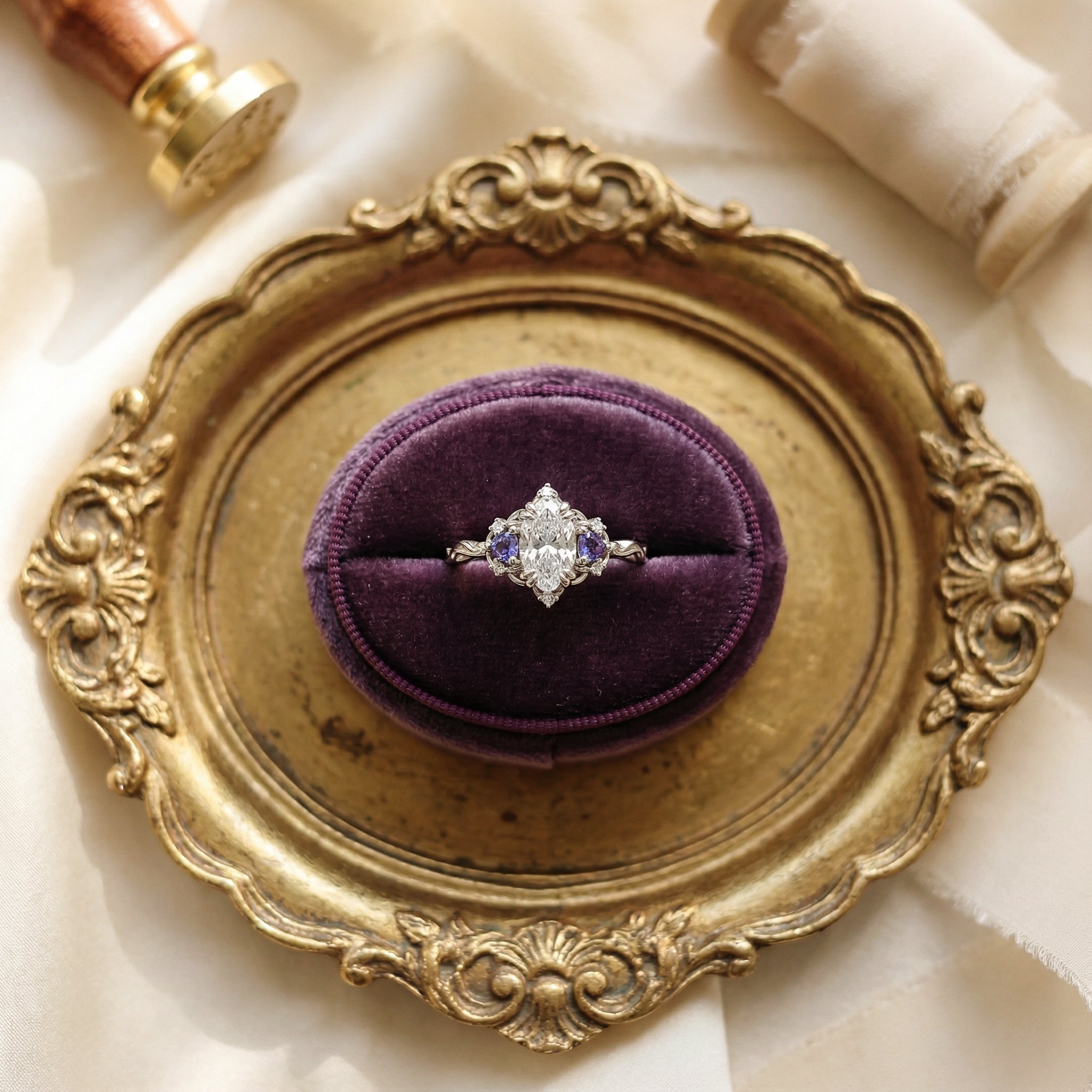
Vintage engagement rings are the one category where the word in the search bar and the ring on the finger can mean two different things. In the trade, "vintage" is an age: an original ring roughly 20 to 100 years old. To most shoppers it is a look: milgrain edges, filigree galleries, halos of small stones, old cut diamonds or colored gems in ornate settings. Both are real, both are worth wanting, and they come with very different trade-offs on durability, sizing, warranty and price. If the ring will be worn every day, a new vintage-inspired ring in a hard stone is the practical choice; if the history is the point, buy an original and budget for restoration.
Vintage Engagement Rings at a Glance
- Vintage: an original ring roughly 20 to 100 years old. Antique: more than 100 years old. Estate: previously owned, any age. Vintage-inspired: newly made in a period style.
- Eras: Georgian (1714 to 1837), Victorian (1837 to 1901), Edwardian (1901 to 1915), Art Deco (1920s to 1930s), Retro (1940s), Mid-century (1950s to 1960s).
- Signature details: milgrain, filigree, halos and clusters, hand engraving, and old mine or old European cut stones with a softer, chunkier sparkle than a modern brilliant.
- Most sought-after looks: Art Deco by a wide margin, then vintage sapphire, Victorian, Edwardian and halo designs.
- Hardness for daily wear: diamond 10, moissanite 9.25, sapphire 9, alexandrite 8.5, aquamarine and morganite 7.5 to 8, moss agate 6.5 to 7 on the Mohs scale.
- What Aquamarise® sells: new vintage-inspired rings, ready to ship or made to order, with a 100-day warranty on sterling silver and vermeil, a limited lifetime warranty on solid gold and platinum, and free U.S. shipping.
What Are Vintage Engagement Rings?
The definition jewelers use, and the one shoppers usually mean.
As of 2026 the vintage window runs from the mid-1920s to the mid-2000s, so it takes in late Art Deco rings, the bold rose gold rings of the 1940s, the clusters and illusion settings of the 1950s and 1960s, and the first generation of rings that now feel "vintage" to the people who grew up seeing them on their mothers' hands. Anything older than a century has crossed into antique territory, which is why the earliest Art Deco rings are quietly changing category every year.
What most people mean when they type the phrase is broader than a date. They mean a ring that looks like the past: detailed metalwork rather than a plain polished band, a center stone framed by smaller ones, engraving on the shoulders, a gallery you can see through, and often a colored gem where a modern ring would carry a colorless diamond. That style can be delivered two ways. You can buy an original period ring, or you can buy a new ring designed in period style. Aquamarise® makes the second kind. Every ring in our antique and vintage engagement rings collection is newly made, either ready to ship or made to order in solid gold or platinum, and it is covered by our warranty: 100 days on sterling silver and vermeil, limited lifetime on solid gold and platinum. We cover both routes here, because the right answer depends on your hand, your habits and your budget.
Three things make a ring read as vintage:
- Detail over minimalism. The metal does something: engraving, filigree, milgrain beading, scrollwork, pierced galleries. A plain four-prong solitaire on a polished band is the opposite of the vintage vocabulary.
- Period motifs. Victorian snakes, hearts and flowers; Edwardian bows and garlands; Art Deco chevrons and stepped shoulders; Retro ribbons and scrolls.
- Color. Sapphires, garnets, aquamarine, pearls and turquoise appear in original rings far more often than in modern ones, where colorless diamond dominates.
Milgrain, filigree, halos and old cuts each get their own section below.
Vintage vs Antique vs Estate vs Vintage-Inspired
Four words that get used interchangeably and mean four different things.
| Term | Definition | What it means when you buy |
|---|---|---|
| Vintage | An original ring roughly 20 to 100 years old (currently mid-1920s to mid-2000s) | Pre-owned. Period materials and construction; condition varies; resizing may be limited; no maker's warranty |
| Antique | An original ring more than 100 years old (Georgian, Victorian, Edwardian, and now early Art Deco) | Pre-owned and often fragile. Collector value; verify with a gemologist; budget for restoration |
| Estate | Any previously owned ring regardless of age; a ring made five years ago and sold on is estate | Pre-owned. May be entirely modern; the word says nothing about style or era |
| Vintage-inspired | A newly made ring designed in the look of a past era (also "vintage style" or "antique style") | New. Choice of metal and stone on made-to-order designs, modern settings and a maker's warranty. This is what Aquamarise® makes |
The distinctions matter because sellers do not always use them carefully. "Estate" is the word to watch: estate engagement rings sound old, but the word means only that someone owned the ring before you. A listing described as estate can be a ring made in 2015 with a modern laser-inscribed diamond. Vintage style engagement rings, antique style engagement rings and vintage-inspired designs are the accurate labels for new rings; everything in our Antique & Vintage collection is newly made in period style. Be cautious with "vintage" on its own when no decade is given. Ask which era the seller believes the ring comes from and what the evidence is.
The evidence usually lives on the inside of the band. American rings usually carry karat stamps such as 10K, 14K or 18K; European rings use fineness numbers such as 585 or 750; hallmarked British rings carry a full hallmark that includes a date letter, which can pin a ring to a single year. Platinum marks ("PLAT" or "IRID PLAT") make a ring unlikely to predate the 1890s, and most platinum rings date from after about 1905, when the oxyacetylene torch made platinum practical at the bench. The cut of the stone is the other witness. A diamond with a tiny table, a high crown and an open culet you can see straight through is an old cut; a laser inscription on the girdle only tells you the stone was graded or inscribed by a lab in recent decades, not how old the diamond or the setting is. For the darker side of the Victorian vocabulary, our guide to Victorian gothic engagement rings covers mourning jewelry, serpents and memento mori motifs in detail.
Vintage Engagement Ring Eras: Georgian to Mid-Century
Six design periods, the cues that identify each, and how each translates into a new ring.
Every era had a dominant metal, a dominant cut and a handful of motifs that show up again and again. Learn the cues and you can place a ring in its era with some confidence, and, more usefully, you can tell a jeweler exactly which look you want instead of pointing at a saved photo and hoping. The table gives the short version; the notes below give the detail.
| Era | Years | Signature cues | Typical stones and cuts | Metal |
|---|---|---|---|---|
| Georgian | 1714 to 1837 | Closed-back (foiled) settings, hand-fabricated metalwork, repoussé and cannetille, nature and memento mori motifs | Rose cuts, old mine cuts, garnet, foiled paste, pearl | Silver-topped gold, high-karat yellow gold |
| Victorian | 1837 to 1901 | Snakes, hearts, flowers, daisy clusters, gypsy (flush) settings, acrostic rings, seed pearls | Old mine cuts, garnet, turquoise, sapphire, opal | Yellow and rose gold |
| Edwardian | 1901 to 1915 | Filigree, milgrain, lace-like piercing, bows and garlands, knife-edge shanks | Old European cuts, sapphire, pearl | Platinum |
| Art Deco | 1920s to 1930s | Geometry and symmetry, stepped shoulders, calibré-cut accents, enamel, Egyptian and East Asian motifs | Step cuts (Asscher, emerald, baguette), old European and transitional cuts, sapphire, onyx, emerald | Platinum, white gold |
| Retro | 1940s | Bold sculptural scrolls, ribbons and bows, cocktail scale, illusion settings | Large synthetic ruby and sapphire, citrine, aquamarine, small diamonds | Rose and yellow gold |
| Mid-century | 1950s to 1960s | Clusters, ballerina halos of tapered baguettes, fishtail-set accents, illusion heads, baguette shoulders, floral sprays | Round brilliants, marquise, pear, baguettes | White gold, platinum |
Georgian Engagement Rings (1714 to 1837)
Georgian rings were made entirely by hand, and it shows in the best possible way: no two are identical. Stones were cut by eye into rose cuts and early cushion-shaped old mine cuts, then set in closed backs with a sliver of metal foil behind them to bounce candlelight back through the stone. Diamonds were set in silver so the white metal would not tint them, with gold underneath so the silver would not blacken the wearer's skin, which is where the term "silver-topped gold" comes from. Motifs ran to flowers, bows, and the memento mori skulls and urns that the era considered romantic rather than morbid. Genuine Georgian rings are rare, fragile and expensive; the style survives in modern rose cut and bezel designs.
Victorian Engagement Rings (1837 to 1901)
Queen Victoria, who as monarch had to do the proposing, became engaged to Prince Albert in 1839, and he gave her a gold serpent ring set with an emerald, her birthstone; the snake became the defining Victorian motif of eternal love. Yellow gold dominated for the whole reign. Early Victorian rings were romantic and sentimental: hearts, clasped hands, forget-me-nots, and acrostic rings whose stones spelled a word (ruby, emerald, garnet, amethyst, ruby, diamond for "REGARD"). The South African diamond discoveries that began in 1867 made diamonds far more available to the middle class, and the daisy cluster, a center stone ringed by old mine cuts, became the era's engagement ring. Late Victorian taste turned lighter, with stars, crescents and the flush gypsy setting. Tiffany introduced the six-prong solitaire in 1886, which is why the "classic" solitaire is itself a Victorian invention. The gothic engagement rings collection carries that darker Victorian mood into new designs.
Edwardian Engagement Rings (1901 to 1915)
Edwardian rings are the ones people describe as lace. The oxyacetylene torch, developed around 1903, let jewelers melt and work platinum routinely, and because platinum is so strong it could be drawn into wire and pierced into filigree far finer than gold allowed. The result was the garland style: bows, ribbons, wreaths and swags in white metal, edged with milgrain beading and set with old European cut diamonds, natural pearls and sapphires. Everything was white on white, delicate and airy. This is the era most vintage-inspired halo and filigree rings are drawn from, and it suits a fine platinum or white gold setting today; see the platinum jewelry collection for the closest modern match in metal.
Art Deco Engagement Rings (1920s to 1930s)
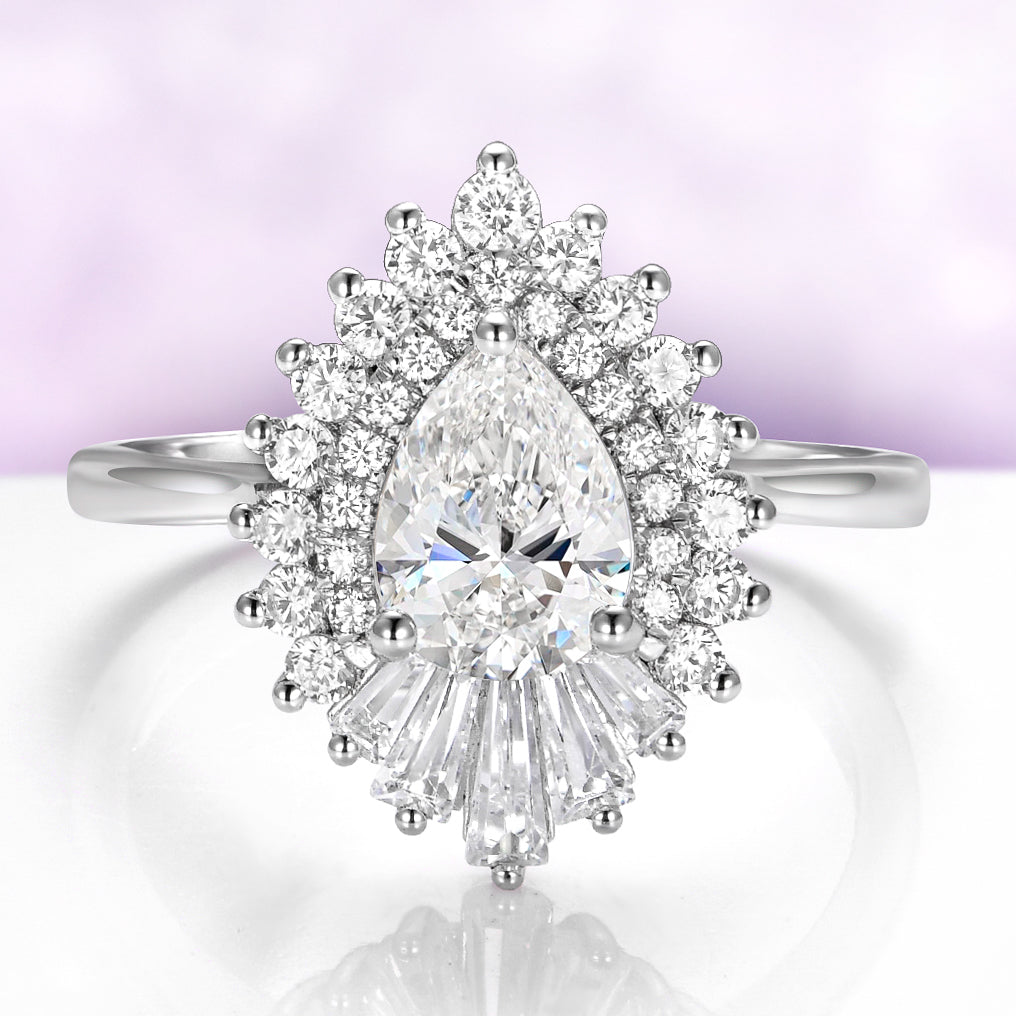
Art Deco takes its name from the 1925 Paris Exposition Internationale des Arts Décoratifs, and it is the most sought-after vintage style by a wide margin. Where Edwardian rings were curved and soft, Deco rings are straight-edged and symmetrical: stepped shoulders, chevrons, octagonal and hexagonal outlines, and borders of calibré-cut sapphires, onyx or emeralds cut to fit the metal exactly. Step cuts rule the era. The Asscher cut, patented by Joseph Asscher in 1902, the emerald cut and the baguette all read as Deco on sight, and old European and transitional cut rounds fill the centers of countless period halos. White gold, patented in the 1910s as a cheaper substitute for platinum, spread quickly through the 1920s. The discovery of Tutankhamun's tomb in 1922 added lotus, scarab and pyramid motifs. For the shapes, browse emerald cut engagement rings and Asscher cut engagement rings, and for the color, sapphire engagement rings.
Retro Engagement Rings (1940s)
During World War II the United States restricted platinum to military use, and many white gold alloys were restricted with it, so jewelers turned back to yellow and rose gold. Retro rings are big, sculptural and confident: scrolls, ribbons, bows and buckles in polished rose or yellow gold, often set with large synthetic rubies and sapphires (which were fashionable, not a compromise) or with aquamarine and citrine. Diamonds were small, so illusion settings with a bright white metal plate around the stone were used to make them read larger. If you love warm metal and a ring with presence, this is your era; start with rose gold rings.
Mid-Century Engagement Rings (1950s to 1960s)
Postwar prosperity and the "A Diamond Is Forever" campaign of 1947 fixed the diamond ring as the American default, and white metal returned. Mid-century engagement rings favored clusters and floral sprays, ballerina halos of tapered baguettes, fishtail-set accents, illusion heads, and elongated fancy shapes, with the marquise and the pear at the height of their popularity. Baguette shoulders on a round center is the quintessential 1950s layout. Today the layout translates directly into marquise engagement rings, pear shaped engagement rings and cluster-style halos.
Signature Details: Milgrain, Filigree, Halos, Engraving and Old Cuts
The five details that do most of the work, and what each one means for wear.
Milgrain
Milgrain (from the French for "a thousand grains") is the row of tiny metal beads that runs along the edge of a bezel, a halo or a band. It was applied with a knurling wheel by Edwardian and Art Deco jewelers, and it does two things: it softens a hard edge so the ring looks finished rather than machined, and it catches light along the rim so a small ring reads as more detailed than it is. On original rings, milgrain wears smooth over decades of contact, which is one of the ways appraisers judge age and wear. On a new ring it is crisp, and on a bezel-set design it decorates the rim that protects the girdle of the stone while adding the period edge.
Filigree
Filigree is openwork: fine wire scrolls or a pierced sheet of metal forming lace-like patterns in the gallery, the shoulders or the sides of the head. It is the Edwardian signature and it lightens a ring visually, letting light through from the sides. The practical caveat is that antique platinum filigree is thin and can crack under resizing or a hard knock, while filigree cast new in full-weight metal is far tougher. Filigree also blocks resizing across the pattern, which is why a made-to-order ring in your exact size is the safer way to own the style.
Halos and clusters
The frame around the center stone is the oldest vintage idea of all. Georgian clusters put a colored center inside a ring of rose cuts; Victorian daisy clusters did the same with old mine cuts; Edwardian and Art Deco jewelers tightened the frame into a true halo of small stones set in platinum. The modern halo is a direct descendant, which is why it is the most wearable route into vintage style: it works with any center shape, any metal and any budget. Our halo engagement rings collection holds the classic versions; the hidden halo engagement rings tuck the frame under the stone for a quieter take.
Engraving
Wheat, scroll and orange blossom patterns cut into the shoulders and band were standard on rings from the 1900s through the 1950s, and inside-band inscriptions of dates and initials are how many antique rings are dated today. On a new ring, patterned engraving is part of the design, and the period habit of dates and initials inside the band lives on as complimentary laser engraving on most of our rings (up to 16 characters on women's rings; custom fonts $25). Engraved pieces are final sale, and our engraving page covers fonts, symbols and which band widths take an inscription cleanly.
Old cuts versus modern brilliants
Before electric light, diamonds were cut for candlelight, and it shows. Old cuts have small tables, high crowns and open culets, and they return light in broad, slow flashes rather than the tight, bright pinpoints of a modern round brilliant. Marcel Tolkowsky published the proportions for the modern brilliant in 1919, and over the following decades the old cuts faded from production. The table below is the quick identification guide.
| Cut | Period | Outline and structure | How it looks on the hand |
|---|---|---|---|
| Rose cut | 1500s onward, revived today | Round or oval, flat base, domed top of triangular facets, no pavilion | Soft glow with little fire; sits low on the finger |
| Old mine cut | 1700s to late 1800s | Squarish cushion, tiny table, high crown, large open culet, 58 facets | Chunky, warm flashes; the classic candlelight sparkle |
| Old European cut | 1890s to 1930s | Round, small table, high crown, open culet, deep pavilion | Broad "checkerboard" flashes; reads slightly smaller than its weight |
| Transitional cut | 1920s to 1940s | Round, larger table, smaller culet, shallower crown | Halfway between old and modern light return |
| Modern round brilliant | 1919 onward | Round, large table, shallow crown, pointed culet, 57 or 58 facets | Tight, bright, high-contrast sparkle; maximum brightness |
The Gemological Institute of America labels a round diamond "old European cut" on its reports when it meets at least three of four criteria: a table of 53 percent or smaller, a crown angle of 40 degrees or steeper, lower-half facets of 60 percent or shorter, and a slightly large or larger culet. That tells you how distinct these stones are from modern rounds. Fine original old cuts can command a premium today because genuine period stones are finite and only a few cutters make new ones to old proportions. The practical route to that sparkle in a new ring is a cushion or oval center, or an "antique cut" moissanite or lab-grown diamond cut to old European proportions on purpose. Our cushion cut engagement rings are the closest modern outline to the old mine cut, and the cushion cut guide explains the difference between antique, elongated and modified cushions.
Best Gemstones for a Vintage Look
Period color, modern durability. Hardness numbers included so you know what will survive daily wear.
Original rings of all periods used colored stones freely, so vintage style is one of the few places where a colored center is more historically correct than a colorless one. Hardness is the number to check first: a daily-wear ring rubs against keys, counters and other rings, and softer stones lose their crisp facet edges. On the Mohs scale of 1 to 10, anything at 7.5 or above wears well every day with normal care, 8 and above suits hands-on work, and stones at 7 or below need a protective setting and gentler habits. The International Gem Society publishes the full ranking; here is how the period stones compare.
| Gemstone | Mohs hardness | The vintage angle | Best eras | Explore |
|---|---|---|---|---|
| Lab-grown diamond | 10 | The classic colorless look of period diamonds; available in old European and rose cut styles | Edwardian, Art Deco, Mid-century | Lab-grown diamond rings |
| Moissanite | 9.25 | More rainbow fire than diamond; the hardest popular diamond alternative | Any era; ideal for Art Deco halos | Vintage moissanite rings |
| Sapphire | 9 | The most historically accurate colored stone; blue, teal, pink or white | Victorian, Edwardian, Art Deco | Sapphire rings |
| Alexandrite | 8.5 | Green or bluish green in daylight to purple or purplish red under warm light (lab-grown stones most often green to purple); discovered in Russia in 1830 | Victorian, Retro | Alexandrite rings |
| Aquamarine | 7.5 to 8 | Pale sea blue; the Deco and Retro cocktail-ring stone | Art Deco, Retro | Vintage aquamarine jewelry |
| Morganite | 7.5 to 8 | Peach-pink beryl that glows in rose gold; named in 1911 | Retro, Edwardian-style halos | Morganite rings |
| Moss agate | 6.5 to 7 | Green dendritic inclusions; suits Victorian nature motifs | Victorian nature-inspired | Moss agate rings |
Sapphire is the safest choice if you want a colored center you never have to think about. It turns up in rings from Victorian to Deco, it takes any cut, and at Mohs 9 only diamond and moissanite are harder. Blue is the period standard for vintage sapphire engagement rings, but teal, pink and white sapphires are all at home in a filigree or halo setting; the sapphire engagement rings guide compares the colors and origins.
Moissanite is the modern answer to the old cut diamond. Its extra dispersion gives it more rainbow fire than diamond; cut in an antique or old European style, it brings a lively, period-appropriate sparkle at a fraction of the price of a diamond, and at 9.25 it is as close to worry-free as a center stone gets. The moissanite engagement ring guide covers cuts, sizes and how it compares with diamond.
Alexandrite was discovered in Russia's Ural Mountains in 1830 and became a Russian court favorite because its green-by-day, red-by-candlelight change matched the red and green of imperial Russia's military colors. Today the change is described as green or bluish green in daylight to purple or purplish red under warm light, and the lab-grown alexandrite in our rings most often shows green to purple. Lab growth makes the stone affordable in a full-size center, and at 8.5 it is harder than most colored gems; see the alexandrite engagement ring guide.
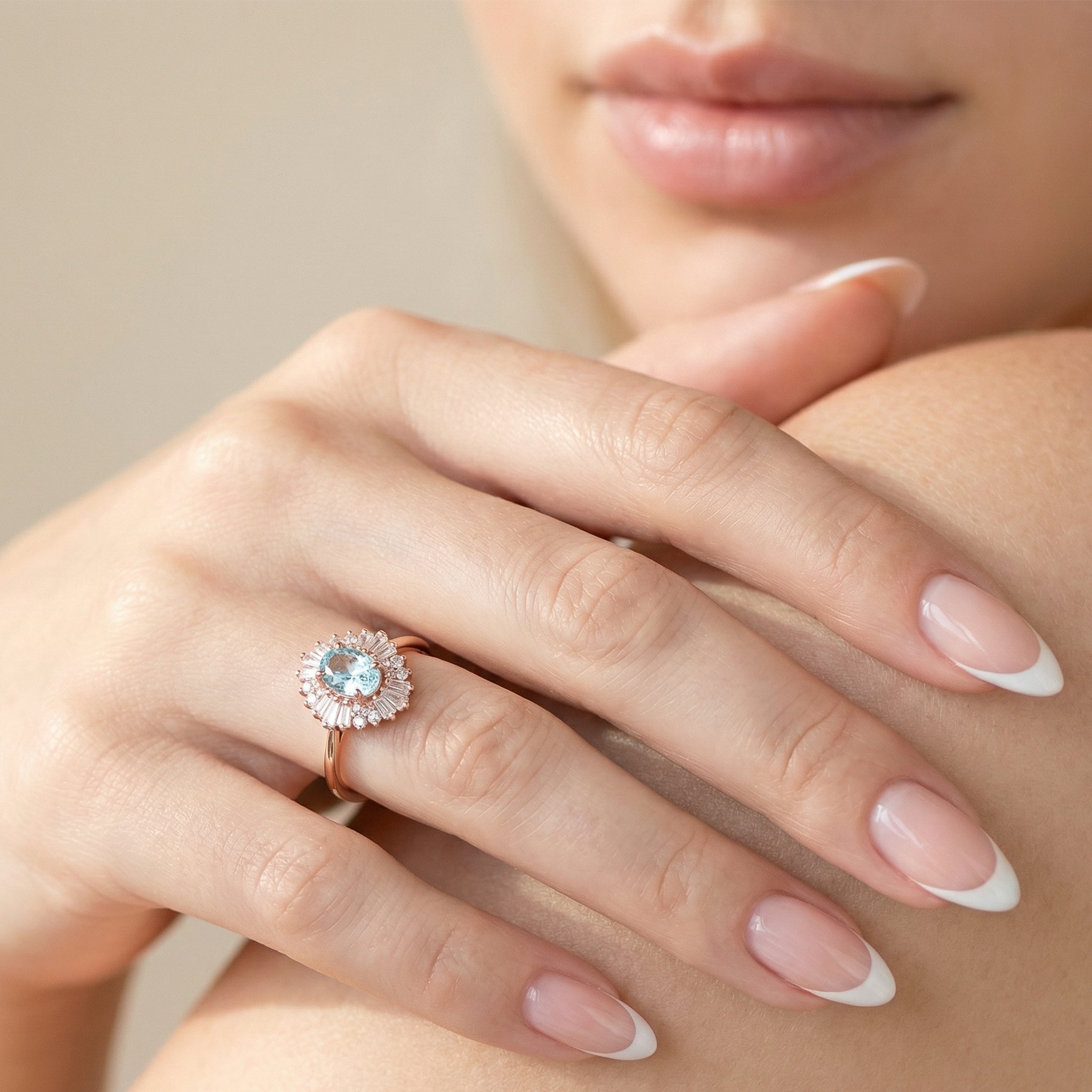
The pale, watercolor tones of Deco and Retro cocktail rings belong to two beryls, aquamarine and morganite, both 7.5 to 8 on the Mohs scale. Aquamarine flatters white metals; morganite's peach tone deepens in rose gold. Both need a little more care than sapphire (a prong check every year, no ultrasonic if the stone has inclusions), but both are comfortably daily-wear stones. The morganite engagement ring guide goes into color grades and settings.
At 6.5 to 7, moss agate needs the most protection of any stone here, and it is also the most Victorian in spirit, because its green dendrites look like pressed ferns and pair naturally with leaf and vine metalwork. A bezel, or prongs set low with a milgrain rim, keeps its edges safe; the moss agate engagement ring guide covers the stone itself, and our guide to which settings protect it best compares the options.
Lab-grown diamond is chemically identical to mined diamond and now available in intentional old European and rose cut styles, which makes it the most faithful choice for an Edwardian or Art Deco design. The lab-grown diamonds guide covers grading and pricing, and our best gemstones for engagement rings page compares ten diamond alternatives by hardness, toughness and daily-wear suitability.
Metals for Vintage Engagement Rings: Rose Gold, Yellow Gold, Platinum and Sterling Silver
Each era had a metal. Choose by look, by budget and by how hard you are on your hands.
| Metal | Era association | Wear notes | Aquamarise® warranty |
|---|---|---|---|
| Solid yellow gold (10K, 14K, 18K) | Georgian, Victorian | Warm and classic; 14K is the daily-wear sweet spot, 18K is richer and softer | Limited lifetime warranty |
| Solid rose gold | Victorian, Retro | Copper makes it harder than yellow gold of the same karat; flatters morganite and alexandrite | Limited lifetime warranty |
| Platinum | Edwardian, Art Deco | Dense, naturally white, holds filigree and milgrain best; develops a soft patina | Limited lifetime warranty |
| Solid white gold | Art Deco, Mid-century | Rhodium finish gives a bright white; refreshed every year or two on a ring worn daily | Limited lifetime warranty |
| Sterling silver 925 | Georgian silver-topped precedent | Solid 925 with a rhodium finish for brightness and tarnish resistance; the most accessible way into period style | 100-day warranty |
| 14K gold vermeil | Rose or yellow gold look | 14K gold over solid sterling silver; the warm-metal eras close to a sterling price | 100-day warranty |
Yellow gold
Yellow gold is the Georgian and Victorian metal, and a yellow gold ring with a cluster or a serpent motif reads as older than the same design in white metal. Karat matters for wear: 14K is 58.5 percent gold and the best balance of color and hardness for daily use, while 18K is richer in color and noticeably softer. Our 10K vs 14K vs 18K guide compares them, and the solid gold engagement rings collection shows vintage-inspired designs made to order in solid 10K, 14K and 18K gold.
Rose gold
Rose gold gets its color from copper, which also makes it a little harder than yellow gold of the same karat. It was the Retro metal of the 1940s and a Victorian favorite before that, and it is the natural partner for morganite, alexandrite and champagne moissanite. It also warms a white stone slightly, which is exactly the effect that makes vintage rose gold engagement rings look lived-in rather than clinical. The yellow vs white vs rose gold comparison covers skin tone and maintenance.
Platinum and white gold
Platinum is the Edwardian and Art Deco metal for a reason: it is naturally white, dense, and strong enough to hold filigree, milgrain and tiny halo stones without bulk. Our platinum rings are made to order and carry our limited lifetime warranty. White gold delivers the same color with a rhodium finish that keeps it bright white; on a ring worn daily the finish is refreshed every year or two, usually a same-day job for a bench jeweler. Compare the two in platinum vs gold, and browse the white gold jewelry collection for Deco-style pieces.
Sterling silver and gold vermeil
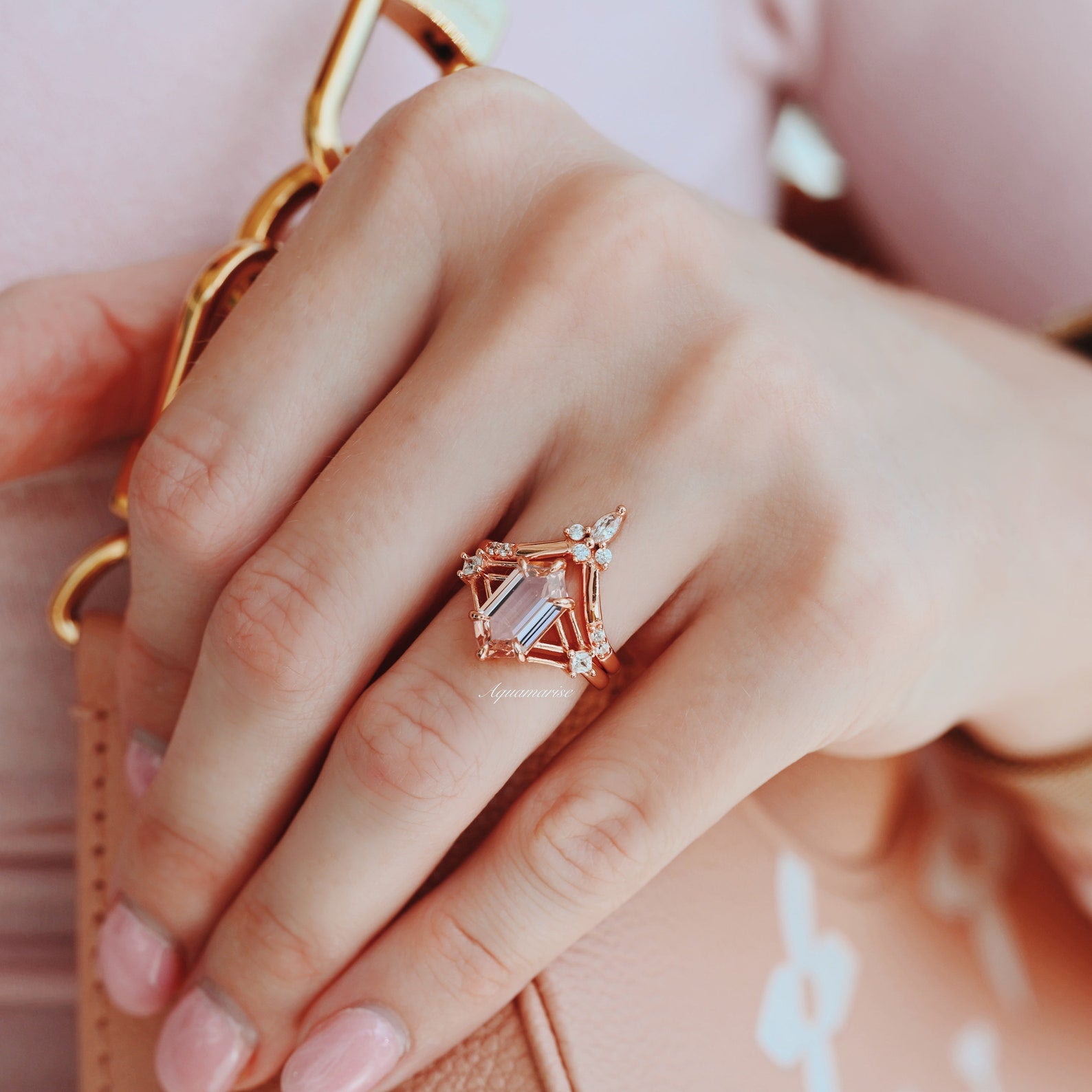
White metal over gold has a long history: Georgian jewelers set their diamonds in silver because it kept the stones white. Our sterling silver is solid 925 with a rhodium finish, which gives it the bright white of platinum and strong tarnish resistance, and it is the most accessible way to wear an ornate vintage design with a real gemstone. Gold vermeil is 14K gold over that same solid sterling base, so you get the warm Victorian and Retro metal color close to a sterling price. Both carry our 100-day warranty. See what 925 sterling silver is, what gold vermeil is, the sterling silver engagement rings collection, and the full precious metal guide for a side-by-side of every option.
Vintage Engagement Ring Settings
The setting decides how the ring sits, snags and wears.
- Halo. The Edwardian and Art Deco frame: a ring of small stones around the center, often milgrained. It makes any center look larger and suits every shape, which makes vintage halo engagement rings the most versatile of the period designs. Browse halo engagement rings.
- Cluster. The Victorian and Mid-century layout where the center and its surround are similar in size, like a daisy or a floral spray. Less formal than a halo and very forgiving of small stones. See floral engagement rings for the botanical versions.
- Three-stone. Past, present and future. Popular in Victorian and Edwardian rings and unmatched for showing off two colors at once, such as a white center with sapphire or alexandrite sides. Browse three stone engagement rings.
- Vintage solitaire. A single stone on a band with an engraved or pierced gallery, a cathedral profile or a knife-edge shank. The 1886 six-prong is the original. Browse solitaire engagement rings.
- Bezel. The Georgian closed back, opened up. A rim of metal around the girdle protects the stone better than any prong setting and takes milgrain beautifully; it is the setting we recommend for softer stones and hands-on jobs. Browse bezel set engagement rings.
- Pavé and milgrain bands. Small stones bead-set down the shoulders, usually edged with milgrain, so the band carries as much detail as the head. Browse pavé engagement rings.
- Toi et moi. Two stones side by side, "you and me," a design that dates to the ring Napoleon gave Josephine in 1796 and that the Victorians and Edwardians adopted. Browse toi et moi engagement rings, and read what a toi et moi ring is.
- Nature-inspired. Leaves, vines and branches wrapping the stone: the Victorian and Art Nouveau strand of the vintage look. Browse nature inspired engagement rings.
Whichever setting you choose, the practical questions are the same: how high does the stone sit (higher catches on sweaters and door frames), how much metal protects the girdle, and whether the detail runs all the way around the band (which rules out resizing). Our engagement ring styles and setting types guide covers each option with pros, cons and a settings comparison table, and the engagement ring buying guide ties settings to stones and budgets.
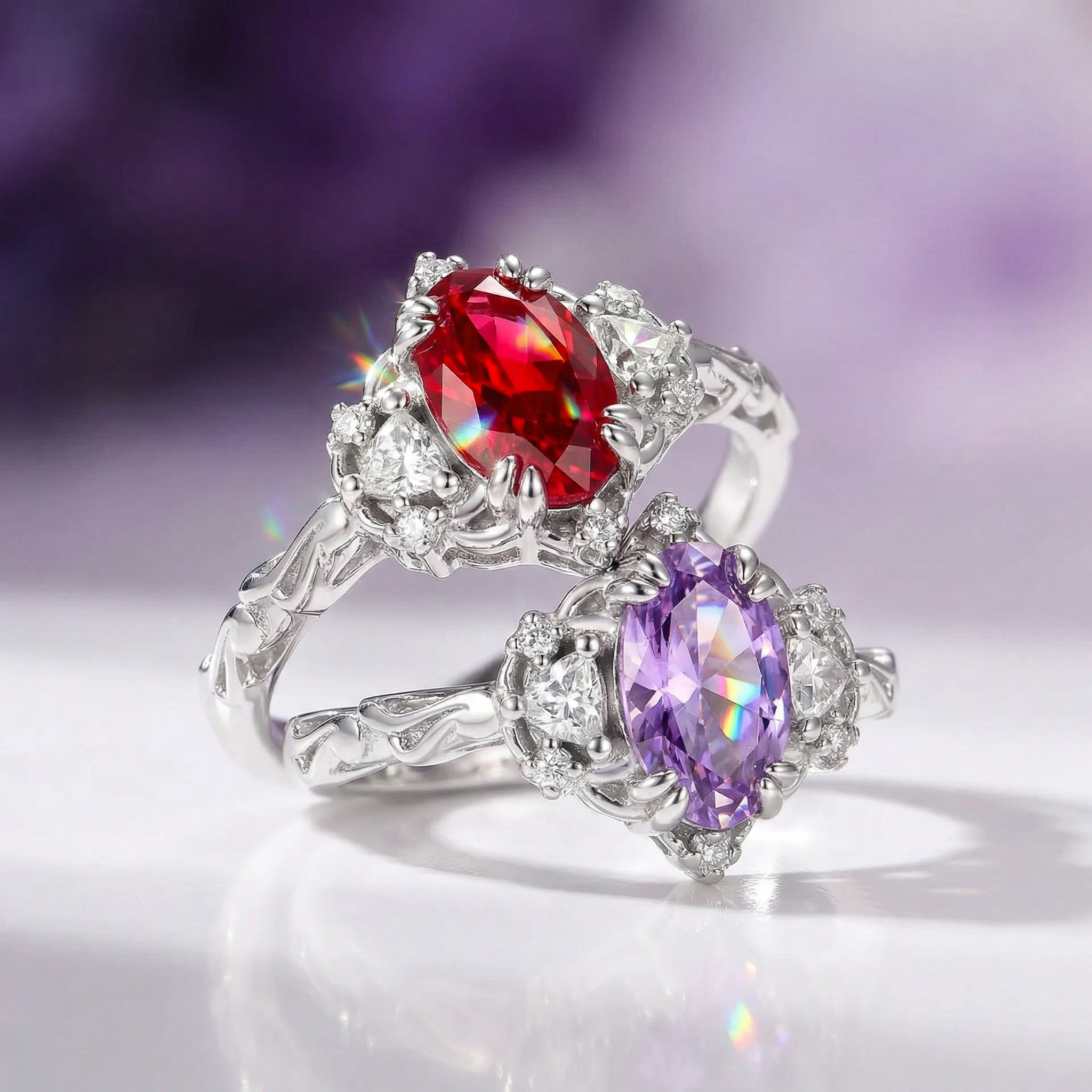
Vintage Moissanite Engagement Rings
Period-style settings built around moissanite, the hardest popular diamond alternative, in colorless and colored stones.
Shop vintage moissanite ringsTrue Antique vs New Vintage-Inspired: Durability, Sizing, Warranty and Price
Where an original wins, where a new ring wins, and who each one suits.
| Factor | Original antique or vintage ring | New vintage-inspired ring (Aquamarise®) |
|---|---|---|
| Authenticity | A genuine period piece; provenance and history are part of the value | New; period style, not period age |
| Condition | Thinned shanks, worn prongs, old solder joints; restoration often needed before daily wear | Full-weight metal, fresh prongs, modern settings |
| Stones | True old cuts, sometimes chipped, foiled or replaced over the years | Your choice: moissanite, sapphire, alexandrite, lab-grown diamond, aquamarine, morganite, moss agate |
| Sizing | Limited; filigree, engraving and eternity-style bands often cannot be resized | Made to order in your size, or ready to ship in standard sizes; one free size exchange |
| Customization | None without altering the original and reducing its value | Metal, stone and engraving; custom designs by quote |
| Warranty | Usually none; a return window at best | 100-day warranty on sterling silver and vermeil; limited lifetime warranty on solid gold and platinum |
| Availability | One of a kind; when it sells it is gone | Made to order or ready to ship, with free U.S. shipping |
| Price drivers | Era, maker, condition, rarity and stone quality | Metal, stone, carat size and complexity of the setting |
| Best for | Collectors, history lovers, anyone who accepts upkeep as part of ownership | Daily wear, exact fit, custom color, budget control |
Choose an original if the history is the point. A ring that was worn through the 1920s carries something no new ring can, and for some couples that is worth every compromise on fit and upkeep. Buy from a dealer who specializes in period jewelry, ask for a written condition report, and factor in the cost of a shank rebuild or re-tipped prongs before you agree on a price. Choose a new vintage-inspired ring if the ring has to survive a real life: a job that uses hands, a gym habit, a partner who wants a specific stone in a specific size, or simply a budget that needs to cover the wedding as well.
If you are shopping the antique route, these are the checks a bench jeweler would make before letting a client wear a period ring daily:
- Read the marks. Karat or fineness stamps, maker's marks and hallmarks tell you the metal and often the decade. No marks at all is common on Georgian, Victorian and Edwardian rings, so it is not disqualifying on its own.
- Measure the shank. A band worn below roughly 1.2 millimeters at its thinnest point will bend and eventually crack; budget for a half-shank or full-shank replacement.
- Loupe the prongs. Prong tips that have worn flat or show old solder will need re-tipping before the stone is safe. Rock the center gently; any movement means work is needed.
- Check the stones for damage. Chips at the girdle, abraded facet junctions and cloudy foil behind a closed back all affect wear and value.
- Confirm resizing is possible. Ask before you buy; a ring that cannot be made to fit is a ring in a drawer.
- Get an independent appraisal. A written valuation from a gemologist who did not sell you the ring protects you for insurance and for resale. Our own appraisal add-on ($175) covers Aquamarise® solid gold and platinum pieces, not rings bought elsewhere.
- Read the return policy. Period rings rarely come with a warranty, so the return window is the only protection you have if a problem surfaces in the first weeks.
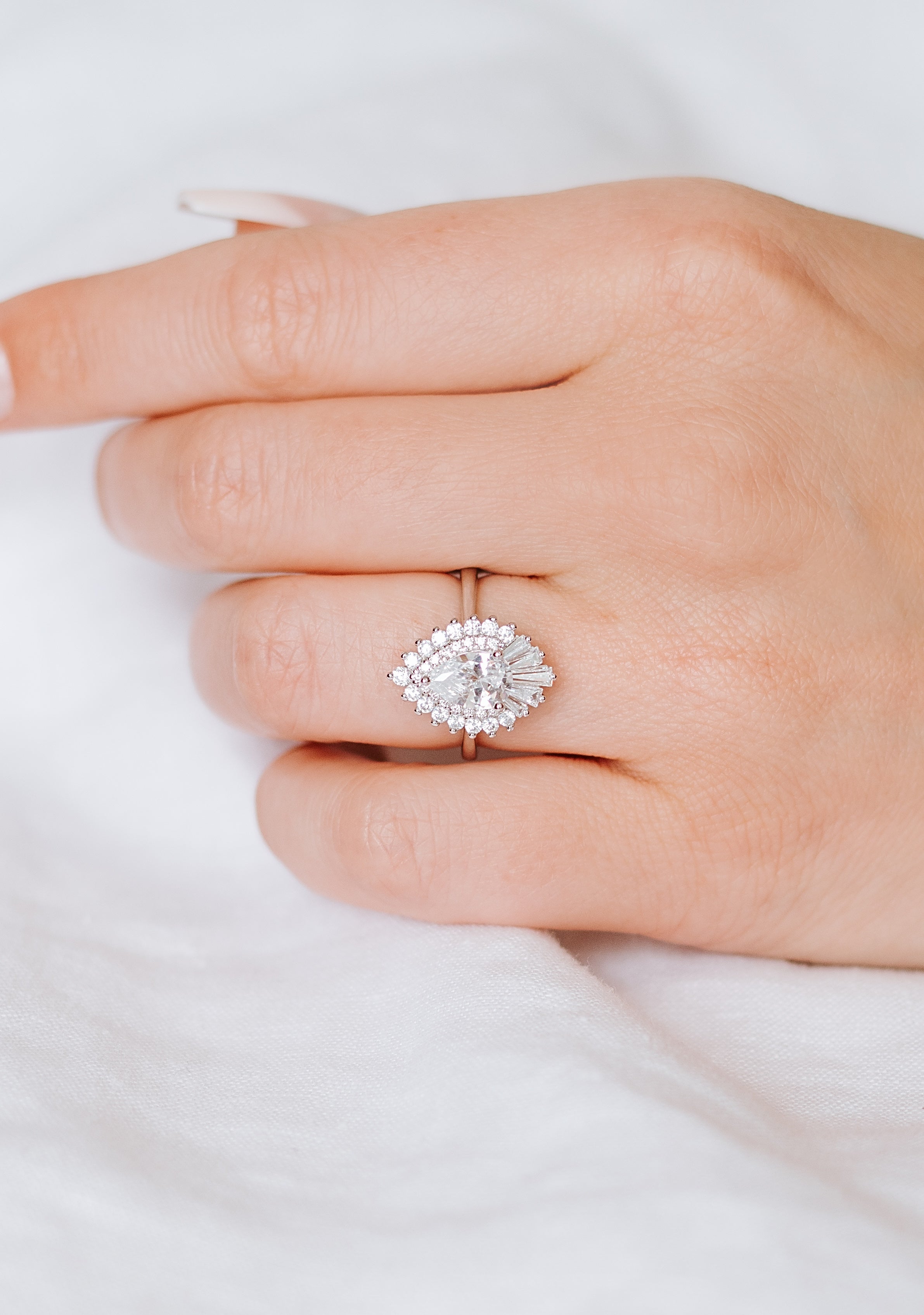
Antique & Vintage Engagement Rings
Vintage-inspired designs from Victorian clusters to Art Deco halos, in sterling silver and gold vermeil ready to ship, or made to order in solid gold and platinum.
Shop vintage-inspired engagement ringsWhat Vintage Engagement Rings Cost
What drives the price in each market, with rough ranges for originals and starting prices for custom work.
Original antique and vintage rings are priced like collectibles, so two antique diamond rings that look alike can vary tenfold in price. The drivers, roughly in order of weight: whether the ring is signed by a major house (a Cartier, Tiffany or Van Cleef & Arpels signature can multiply the price of an otherwise ordinary ring); the size and quality of the center stone, with the finest old European cut diamonds sometimes carrying a premium, though average old cuts often trade below modern rounds of the same weight; the metal, with platinum Edwardian and Deco rings above gold Victorian ones; the era, with Georgian rarest and most expensive per gram of work; and condition, where an unrestored ring with original stones and crisp milgrain outranks a heavily repaired one. As a rough map, unsigned Art Deco platinum rings with a modest old European cut center commonly trade in the low to mid four figures, with signed pieces, larger stones and documented provenance climbing into five figures and beyond.
New vintage-inspired rings are priced like new jewelry, which is much easier to reason about. Four levers set the number, and you control all four:
- Metal. Sterling silver is the entry point, 14K gold vermeil sits just above it, solid 10K and 14K gold step up from there, and 18K gold and platinum sit at the top, in an order that shifts with metal prices. The same design can differ by several multiples between sterling and the top metals, and the design, stone and detail on the hand stay the same.
- Center stone. Moissanite is the most affordable way to a large, bright center; lab-grown diamond costs more per carat; sapphire, lab-grown alexandrite, aquamarine and morganite vary widely with size, color and whether the stone is natural or lab-grown.
- Carat size. Price rises faster than size. A one-carat-equivalent center is the common sweet spot for vintage designs, because halos and clusters make it read larger.
- Complexity. A halo of forty stones, hand engraving, filigree galleries and pavé shoulders all add bench time. A vintage solitaire with an engraved band is the least expensive way to own a period design; a double halo with baguette fan is the most.
For a custom design, sterling silver starts from $100 and solid gold or platinum from $1,000, with a free quote in 1 to 2 days.
Two more things that change the effective price: financing, with interest-free Pay in 4 through Shop Pay or Klarna and 3-, 6- and 12-month plans from $150, and shipping and returns, since a ring that ships free and can be returned costs less in practice than one that does neither (eligible pieces can be returned within 14 days of delivery; made-to-order gold and platinum have separate terms, and engraved pieces are final sale); our shipping page and returns and refunds policy spell out both. If you are deciding how much to spend in the first place, ignore the salary rules (the "3 month rule" comes from De Beers advertising, which suggested one month's salary in 1930s America, two months in the 1980s and three months in its campaigns in Japan) and read how much to spend on an engagement ring, which works from your actual finances instead.
How to Choose a Vintage Engagement Ring
Start with the question of original or new; everything else follows from it.
- Decide original or vintage-inspired. This one choice sets the budget, the sizing options, the stone options and the warranty. If the ring will be worn daily and must fit a specific finger, new is the safer answer. If the history matters more than the fit, go original and budget for restoration.
- Pick the era you actually like, not the one that is trending. Deco geometry if you like clean lines, Edwardian filigree if you like lace, Victorian clusters and serpents for warmth, Retro rose gold for presence. Save three photos of rings you love and look for the common thread; it is usually an era.
- Choose the center stone by hardness first, color second. For a ring worn every day, stay at Mohs 7.5 or above unless you are choosing a protective bezel. Then pick the color: white (moissanite, lab-grown diamond), blue (sapphire, aquamarine), pink (morganite, pink sapphire), green and purple (alexandrite, moss agate).
- Choose the metal by skin tone and habits. Rose and yellow gold warm the design; platinum and white gold keep it crisp; sterling and vermeil get you the same design at the lowest cost. If you work with your hands, favor platinum or 14K over 18K.
- Match the setting to the life it will lead. A bezel or a low-set halo for nurses, climbers and gardeners; a cathedral solitaire or a high halo if the ring is mostly for show. Detail that runs all the way around the band looks wonderful and cannot be resized, so be sure of the size.
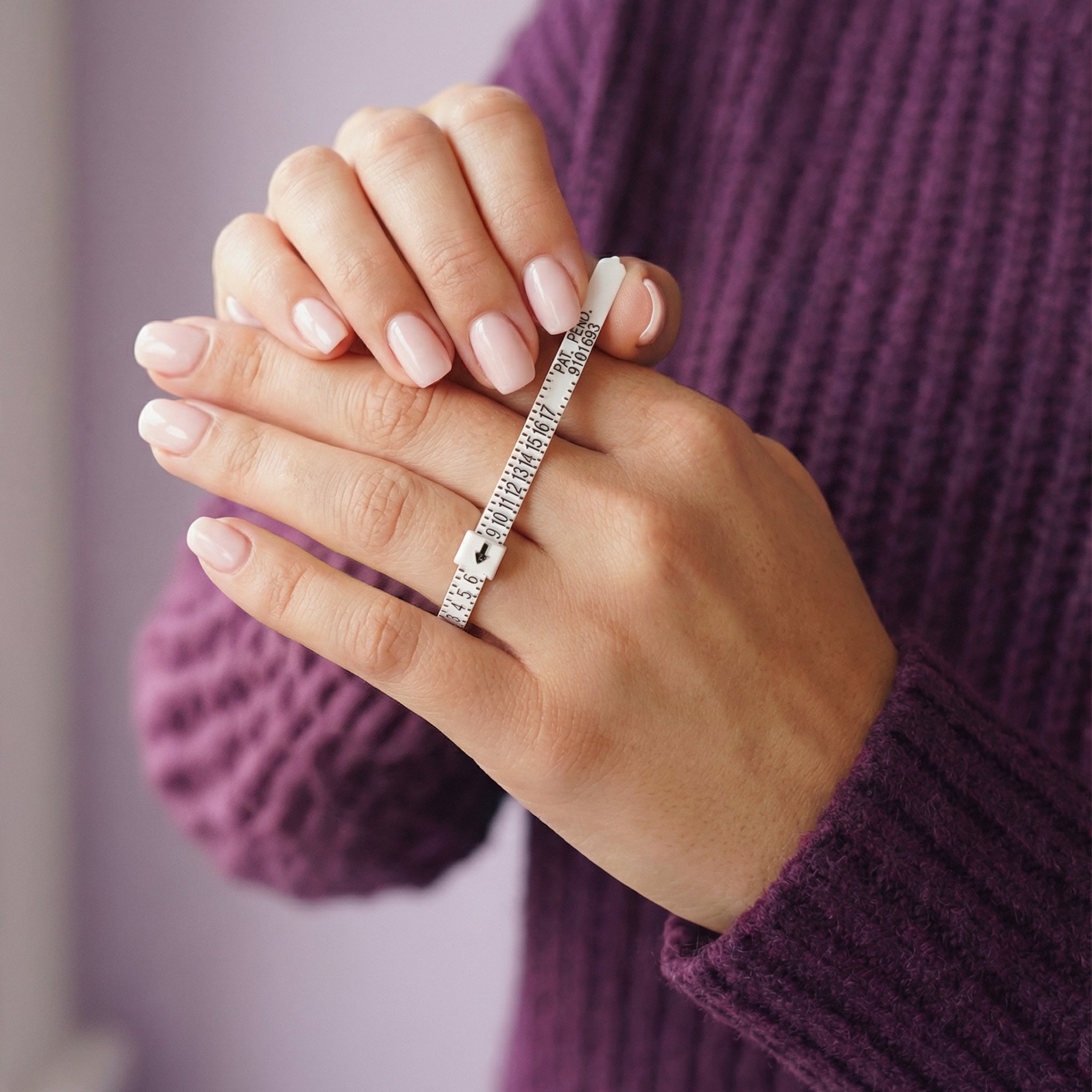
- Get the size right before you order. Measure at the end of the day at room temperature, and remember that wide or detailed bands fit tighter than thin ones. Use the printable ring sizer on our find your size page, or check a ring that already fits against the ring size chart.
- Personalize it. An inside-band engraving is complimentary on most of our rings and is exactly what a period ring would have carried; engraved pieces are final sale. If no stock design is quite right, our build your custom ring service gives a free quote in 1 to 2 days.
- Check the paperwork. Read the warranty, the return window (14 days from delivery on eligible pieces) and the shipping terms before you commit, and if you add an appraisal ($175, solid gold and platinum), keep it with the receipt for insurance. Ready-to-ship rings leave in 1 to 4 business days, while solid gold and platinum are made to order in 3 to 6 weeks, so order early if you have a proposal date. The FAQ page answers the ordering questions we hear most.
Caring for a Vintage-Style Ring
Detail catches light. It also catches lotion, soap and sweater fibers.
The same halos, galleries and milgrain edges that make a vintage ring beautiful give dirt somewhere to hide, and a ring that has gone dull is almost always a ring that needs cleaning rather than one that has worn. The routine below keeps a new vintage-inspired ring looking new; the notes on original rings explain where antiques need a lighter touch.
- Weekly cleaning. Soak for a few minutes in lukewarm soapy water, then work a soft brush through the filigree openings and under the halo, where grime hides in the detail. Rinse and pat dry.
- Ultrasonic and steam. Fine for moissanite, lab-grown diamond and untreated or heat-treated sapphire in solid gold or platinum, but have halo and pavé stones checked afterward, since vibration can loosen small accents. Skip it for sterling silver, gold vermeil and black ruthenium finishes, fracture- or glass-filled stones, moss agate, opal and included aquamarine or morganite, and never use it on an antique closed-back or foiled setting, where moisture behind the stone is permanent.
- Chemicals. Take the ring off for bleach, chlorine, hair products and household cleaners. They rarely harm the stone but they attack gold alloys and finishes.
- Storage. A separate pouch or slot for every ring, so hard centers and halo stones cannot scratch softer gems or rub the milgrain flat.
- Annual checkup. Have prongs, milgrain and any pavé inspected once a year on a daily-wear ring; small stones in a halo are held by tiny beads of metal that a bench jeweler can re-tighten in minutes.
- White metal finishes. Rhodium on white gold and sterling can be refreshed by any jeweler when you want the like-new brightness back. Clean gold vermeil with soap, water and a soft cloth rather than polishing compounds, the same gentle routine as any detailed ring.
If your ring mixes metals or has a softer center, our jewelry care page sorts cleaning by material, how to care for your engagement ring covers when to take it off during the day, and how to clean jewelry at home walks through the at-home methods. Every guide we publish is collected on the guides page.
Vintage Engagement Rings FAQ
What is the difference between vintage and antique engagement rings?
Are vintage engagement rings worth anything?
Where can I buy vintage engagement rings from the 1920s?
What is the 3 month ring rule?
What is a vintage-inspired engagement ring?
Are vintage engagement rings durable enough for everyday wear?
Can vintage engagement rings be resized?
What gemstones look best in vintage engagement rings?
What is the most popular vintage engagement ring style?
Do vintage-inspired engagement rings come with a warranty?
Find your vintage engagement ring
Filigree, milgrain and old-cut looks, built new for daily wear. Every Aquamarise® vintage-inspired ring is handcrafted in our family studio in Niceville, Florida, in sterling silver, 14K gold vermeil, solid gold or platinum, with free U.S. shipping and a limited lifetime warranty on solid gold and platinum. Choose ready to ship, or made to order in your size.
Shop Antique & Vintage Engagement Rings


