


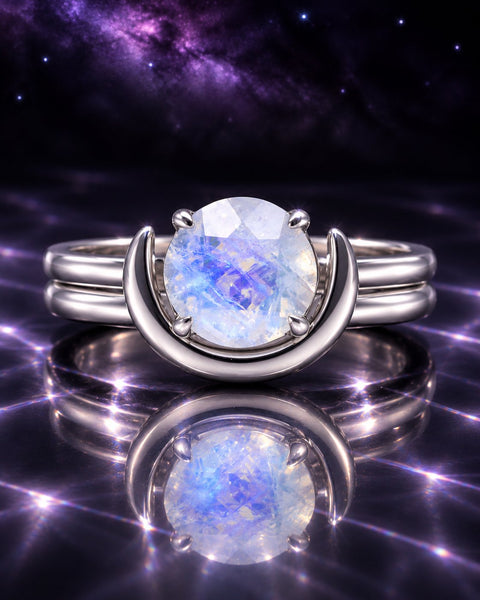
What Finger Does a Promise Ring Go On? Left or Right Hand, Explained
The short answer is the right ring finger, or the left ring finger for a promise to get engaged. Here is every placement, hand by hand and finger by finger, what each one signals, how it works for men, how long the ring is worn, and where it goes after the engagement ring arrives.

A promise ring goes on whichever finger you choose, and most people wear it on the ring finger of the right hand, which keeps it from being mistaken for an engagement ring. If the promise is specifically a promise to get engaged, many couples wear it on the left ring finger instead, where an engagement ring will later replace it. Those two placements cover most promise rings. The rest of this guide covers the others, what each one signals, and the questions that follow: which finger for a man, how long you wear it, and where it goes once you are engaged.
The Quick Answer
- No rule: a promise ring can be worn on any finger of either hand.
- Most common: the right ring finger, which avoids engagement-ring confusion.
- Pre-engagement: the left ring finger, the spot an engagement ring will later take.
- For men: the right ring finger, or the right middle finger for a wider band.
- After engagement: move it to the right hand, a chain, or the wedding stack.
The Short Answer: Right Ring Finger, or Left for a Pre-Engagement Promise
Two placements cover almost every promise ring.
A promise ring has no official finger. It is not a wedding ring, with a tradition fixed by law and liturgy, and it is not an engagement ring, with a spot reserved by custom. That freedom is why the question gets asked so often. In practice two conventions have settled in. The first is the right ring finger: a prominent spot that reads as "serious and committed" without implying a wedding is being planned. The second is the left ring finger, used when the ring is a promise of a future engagement, so that the engagement ring eventually takes the same place.
Everything else is a matter of taste. A middle finger, an index finger, a pinky or a necklace chain are all legitimate, and each sends a slightly different message, which the next sections lay out. Whatever you choose, the ring itself matters more than the finger: our promise rings range from slim bands to gemstone rings, and our promise ring meaning guide covers what the ring stands for in the first place.
Right Hand or Left Hand?
The hand says more than the finger.
The right hand is the default for a promise ring in the United States, Canada and the United Kingdom, for one simple reason: the left ring finger is where engagement and wedding rings go. A ring on the right hand cannot be misread. It also leaves the left ring finger free for the day an engagement ring arrives, so nothing has to move.
The left hand carries the older symbolism. The Romans believed a vein, the vena amoris, ran from the fourth finger of the left hand directly to the heart, which is why Western wedding rings sit there. A promise ring on the left ring finger borrows that meaning. It is the natural choice when the ring is explicitly a step toward marriage, and it is also the choice that invites the most questions, because friends and strangers will assume you are engaged. Some couples like that; others would rather announce an engagement once, with the real ring.
If you are torn, ask what the ring is promising. A promise to get engaged belongs on the left. A promise of commitment, faithfulness, friendship or a personal vow belongs on the right. For the engagement ring itself, our guide to which hand an engagement ring goes on covers the traditions country by country.

Promise Rings
Slim bands, birthstones and matching sets, handcrafted in sterling silver, 14K gold vermeil and solid gold.
Shop Promise Rings
Finger by Finger: What Each Placement Signals
No finger is wrong. Each one is read a little differently.
| Placement | What it signals | Best for |
|---|---|---|
| Right ring finger | Committed, not engaged. The standard promise ring position. | Most promise rings, for women and men |
| Left ring finger | Engaged, or about to be. People will ask. | A pre-engagement promise |
| Right middle finger | A personal piece rather than a relationship status. | Wider bands, men's rings, self-promise rings |
| Left middle finger | Close to the wedding finger without claiming it. | Anyone who wants it near the heart but not mistaken for an engagement ring |
| Index finger | A statement ring; little romantic association. | Friendship rings, bold gemstone rings |
| Pinky | A fashion or family ring; in some traditions a signet. | Very slim bands, stacking |
| On a necklace chain | Kept close, worn privately. | Hands-on jobs, uncertain ring size, a ring that no longer fits |
The finger signals change with what sits beside the ring. A promise ring stacked against a wedding band reads as part of the set; the same ring alone on the right hand reads as a promise ring. Our ring finger meaning guide goes through every finger on both hands, including the thumb, for rings of all kinds.
Promise Ring Finger for Women
Right ring finger by default, left for a pre-engagement promise, stacked once the wedding set arrives.
Women wear promise rings on the right ring finger more than anywhere else, and the reason is practical as much as traditional. A ring there is visible, it sits where people expect a meaningful ring, and it cannot be confused with an engagement ring. Women who receive a pre-engagement promise ring often move it to the left ring finger, enjoy the question it prompts, and then shift it to the right hand on the day the engagement ring arrives.

Style follows the finger. A slim gemstone band or a small solitaire suits the ring finger of either hand and stacks later with a wedding set; see gemstone promise rings, diamond promise rings and minimalist promise rings. A bolder ring, a toi et moi or a kite-cut stone, sits better on the middle finger, where it has room. A birthstone is the most personal choice: our birthstone jewelry collection is sorted by month.

Which Finger Is for a Promise Ring for Him?
The same two conventions, with one extra option.
Men follow the same conventions: the right ring finger for a promise of commitment, the left ring finger for a pre-engagement promise. The one difference is width. Men's promise rings are usually plain or inlaid bands rather than gemstone rings, and a wider band can look like a wedding band on the ring finger of either hand. Many men solve that by wearing the ring on the right middle finger, which carries no marital meaning at all and has more room for a 6 to 8 mm band.
Giving a man a promise ring is as normal as the reverse, and couples increasingly exchange a pair. Matching sets that pair a gemstone ring with a coordinating men's band are in couples promise rings; bands on their own, in tungsten, titanium, sterling silver and gold, are in men's promise rings. Our promise rings for men guide covers meaning, styles and how to choose one, and the band width guide explains which widths suit which fingers.
How Long Do You Wear a Promise Ring?
For as long as the promise stands.
A promise ring is worn until the promise is fulfilled, replaced or set aside. For a pre-engagement ring that usually means one to three years, the time most couples spend between a promise ring and a proposal, after which the engagement ring takes the left ring finger and the promise ring moves. A promise ring that stands for something other than an engagement, such as a commitment between partners who do not plan to marry, a friendship, or a promise to oneself, has no end date and can be worn for life.
Is a promise ring a big deal? Yes, in the sense that it is a deliberate, serious symbol, and no, in the sense that it is not an engagement. The weight comes from the conversation around it. Agree on what the ring means before it is given, and the question of how long to wear it answers itself. For the difference between the two rings in detail, read promise ring vs engagement ring.

What to Do With a Promise Ring After You Get Engaged
Move it, stack it, or wear it on a chain.
- Move it to the right ring finger. The most common choice. The engagement ring takes the left hand, the promise ring keeps its own spot on the right, and both stay in daily wear.
- Stack it with the wedding set. A slim band in the same metal color sits beside most engagement rings. Check that the stones do not rub: a bezel-set promise ring stacks more kindly than a prong-set one. See stackable rings.
- Wear it on a chain. A ring on a pendant chain keeps the promise close without competing with the wedding set. Choose a chain long enough to sit below the collarbone; our necklace length guide has the measurements.
- Reset the stone. A promise ring's center stone can become a pendant or be worked into the wedding band. Ask before the wedding so the metal colors match.
- Keep it. Some people retire the ring to a box the day they are engaged, and bring it out on anniversaries. Nothing requires you to keep wearing it, and nothing requires you to stop.
Couples who exchanged a pair often keep wearing both: hers moves to the right hand, his stays where it was. For sets designed to be worn together from the start, see matching couples rings and his and hers ring sets.
Promise Ring Fingers Around the World
Where the wedding ring moves, the promise ring moves with it.
The right-hand convention for promise rings exists because Western wedding rings sit on the left. In countries where wedding rings are worn on the right hand, among them Germany, Austria, Norway, Denmark, Poland, Russia, Greece and India in many communities, the logic flips: a promise ring goes on the left ring finger, and a ring on the right ring finger reads as a wedding ring. In Brazil, couples often wear engagement bands on the right hand and move them to the left at the wedding, so a promise ring there is usually kept to the middle finger or a chain to avoid the confusion.
In Ireland, the Claddagh ring works as a promise ring with its own code: worn on the right hand with the heart pointing out it means single, on the right hand with the heart pointing in it means in a relationship, and on the left hand it means engaged or married. If you are giving a promise ring to someone from another tradition, ask which hand their family wears wedding rings on, and choose the other.
Size and Fit for the Finger You Choose
The same ring fits differently on each finger.
Fingers on the dominant hand run about half a size larger, the middle finger is roughly a size larger than the ring finger beside it, and the right ring finger is often a touch larger than the left. A promise ring sized for the left ring finger will feel tight if it later moves to the right, which is one more reason to decide the finger before you buy. Measure the exact finger you intend to wear it on, at the end of the day when fingers are largest, using our ring size guide or the at-home measuring methods, and check the conversions in our ring size chart if the recipient knows their size in another system.
If the ring is a surprise and the size is a guess, choose a style that can be resized: sterling silver and solid gold bands resize easily, tungsten and titanium do not. Every Aquamarise ring includes a free one-time size exchange, and engraving turns a plain band into the promise itself, with a date, initials or a few words inside.
Keep reading: what the ring means in our promise ring meaning guide, what a purity ring is and how it differs, how couple rings work, and what knee you propose on when the time comes.
Promise Ring Finger FAQ
What finger does a promise ring go on?
What hand does a promise ring go on?
Can you wear a promise ring on your left ring finger?
Which finger is for a promise ring for him?
Is a promise ring a big deal?
How long do you wear a promise ring?
What do you do with a promise ring after you get engaged?
Does the finger you wear a promise ring on matter?
Can you wear a promise ring on your middle finger or on a necklace?
Should a promise ring match the engagement ring?
Wear your promise, your way
Promise rings for her, for him and for both of you, handcrafted in sterling silver with a rhodium finish, 14K gold vermeil and solid gold. Free US shipping, a free one-time size exchange, engraving available, 30-day returns and a limited lifetime warranty against manufacturing defects.
Shop Promise Rings

