


A kite cut engagement ring is the defining alternative-bridal silhouette of the past decade. Four uneven sides converging at four distinct points — two longer sides at the lower portion and two shorter sides at the upper portion — produce a rhombus-like silhouette that no traditional engagement ring cut replicates. The kite cut engagement ring delivers explicit aesthetic intent: every couple wearing a kite cut engagement ring chose it deliberately, because no one ends up with a kite cut engagement ring by accident.
Popular Engagement Ring Styles
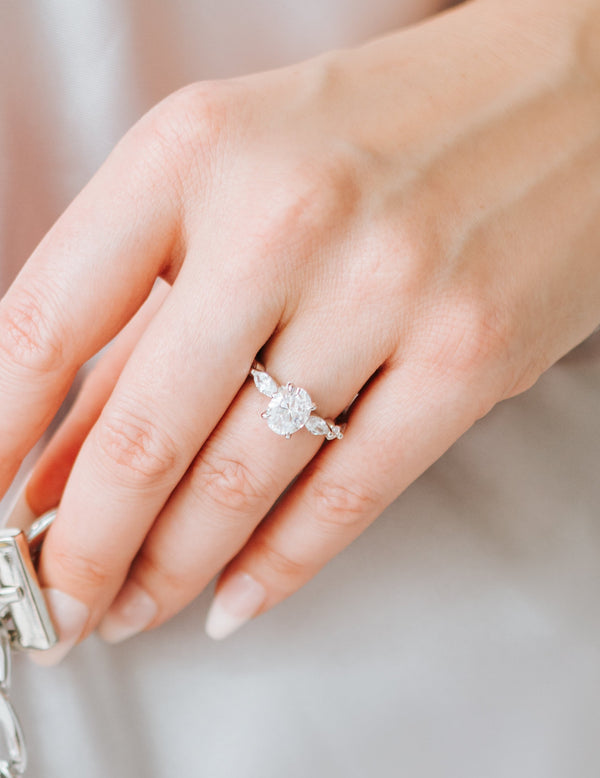
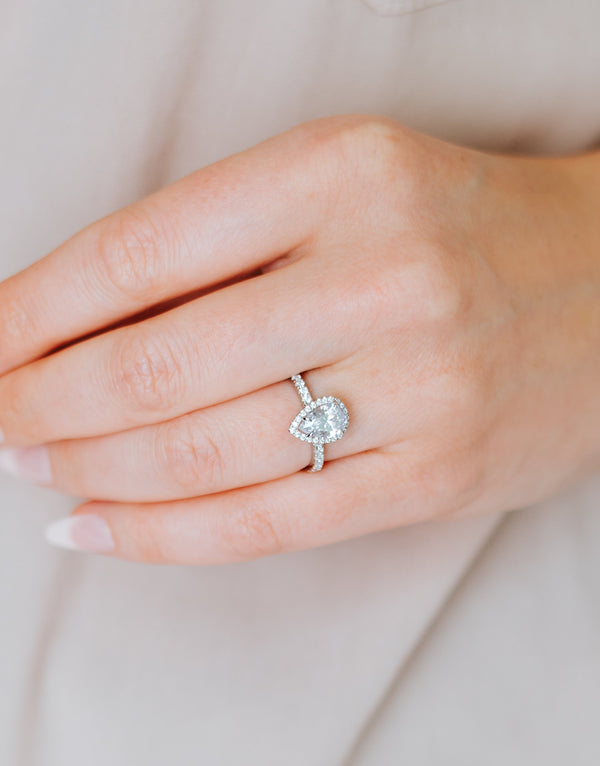
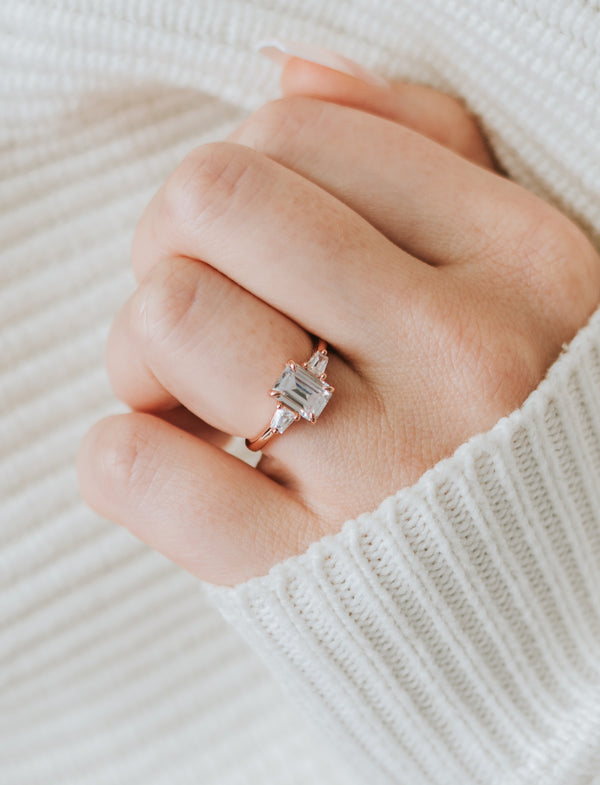
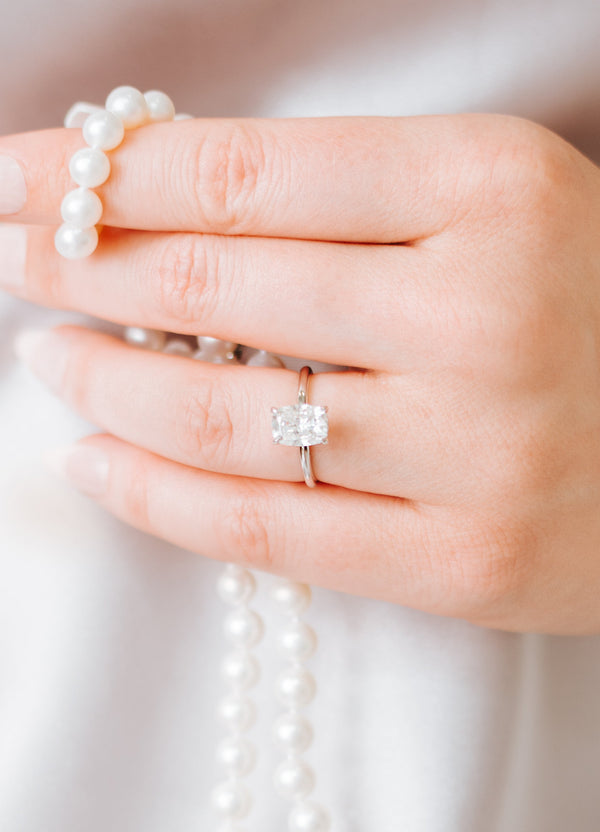
Aquamarise® engagement rings are available across gemstones, settings, and themes. Browse below or use the filters to shop by metal or stone.


Free U.S. Shipping
Dispatched from the USA with care

Hustle-Free Returns & Exchanges
Simple, worry-free process

Ethically Crafted
Responsibly sourced, consciously made

Loved by 200,000+ Couples
Fantasy-inspired, handcrafted jewelry
Why Choose a Kite Cut Engagement Ring
A kite cut engagement ring signals deliberate alternative-bridal aesthetic intent more directly than any other engagement ring shape. The cut has no mainstream defaults — no one is "supposed" to choose kite, which is precisely why couples drawn to deliberate alternative aesthetics consistently land on it. The kite cut engagement ring reads as architectural, geometric, and intentional.
Three factors make the kite cut engagement ring distinctive: a four-sided geometric silhouette unavailable in any other commercial engagement ring cut, natural compatibility with salt-and-pepper diamonds and other distinctive stone materials, and an aesthetic register that aligns with broader alternative-bridal preferences (bezel settings, east-west orientations, modern minimalist metalwork). For broader alternative bridal context, see our alternative engagement rings collection.

Kite Cut Engagement Ring Settings
Kite cut engagement rings perform best in settings that emphasize the cut's directional geometry — typically bezel, east-west, and minimalist solitaire configurations.
Bezel Set Kite Cut Engagement Rings
A bezel set kite cut engagement ring wraps the four-sided silhouette in a custom-shaped metal frame that traces the kite outline exactly — the most architectural setting for the cut and the most popular kite cut engagement ring configuration. The bezel also protects the kite's pointed corners. See our broader bezel set engagement rings collection.
East-West Kite Cut Engagement Rings
An east-west kite cut engagement ring orients the kite horizontally rather than vertically, with the long axis running perpendicular to the finger. The most contemporary kite cut engagement ring orientation, particularly popular in salt-and-pepper diamond configurations.
Solitaire Kite Cut Engagement Rings
A solitaire kite cut engagement ring isolates the four-sided geometry as the entire focal point — clean minimalist expression with claw prongs at each of the four points. See solitaire engagement rings.
Three-Stone Kite Cut Engagement Rings
A three-stone kite cut engagement ring flanks the kite center with two side stones (typically smaller kites, triangles, or trapezoid cuts) — the most architecturally cohesive multi-stone configuration for the kite shape.

Best Stones for Kite Cut Engagement Rings
The kite cut works particularly well with stones that complement the cut's deliberate aesthetic intent — salt-and-pepper diamonds, moissanite, and saturated colored stones all perform beautifully.
Moissanite Kite Cut Engagement Rings
A moissanite kite cut engagement ring delivers maximum brilliance through the kite's modified brilliant faceting — moissanite's high refractive index produces dramatic fire through the geometric silhouette. The most accessible substantial-size kite cut engagement ring option. Mohs 9.25 hardness. See moissanite engagement rings.
Salt-and-Pepper Diamond Kite Cut Engagement Rings
A salt-and-pepper diamond kite cut engagement ring delivers the most aesthetically aligned combination available — salt-and-pepper diamonds (natural diamonds with visible black and white inclusions) and kite cuts have evolved together as the defining alternative-bridal pairing. The diamond's inclusions read as deliberate visual texture within the kite's geometric outline. Available through custom commission via Design Your Own Custom Ring.
Lab-Grown Diamond Kite Cut Engagement Rings
A lab-grown diamond kite cut engagement ring delivers traditional diamond material in non-traditional silhouette — for couples drawn to kite cut geometry but preferring classical diamond aesthetic. See lab-grown diamond engagement rings.
Sapphire Kite Cut Engagement Rings
A sapphire kite cut engagement ring delivers saturated color through geometric framing — Mohs 9 hardness with dramatic color depth. See sapphire engagement rings.
For custom kite cut engagement rings in other stones, see Design Your Own Custom Ring.
Center Stone Size for Kite Cut Engagement Rings
Kite cut engagement rings work across a wider carat range than traditional cuts because the kite silhouette reads clearly even at smaller carat weights. 0.5-1.5 carat is the most popular kite cut engagement ring center stone range — substantial enough to showcase the geometric silhouette while remaining proportional for everyday wear. Statement kite cut engagement rings push to 2-3 carats and beyond. Because the kite cut elongates visually along its long axis, kite cut engagement rings appear larger than equivalent round carat weights would suggest.
Best Metals for Kite Cut Engagement Rings
Sterling silver and white gold deliver the cleanest contemporary framing for kite cut engagement rings — the most popular metal choice in alternative-bridal contexts. Yellow gold and rose gold create warm contemporary contrast against the cut's geometric silhouette. Solid 14K gold delivers heirloom-grade alternative-bridal construction. See our precious metal guide.

Kite Cut Engagement Rings vs. Other Cuts
Kite Cut vs. Hexagon Engagement Rings
Kite cut engagement rings and hexagon engagement rings both deliver geometric alternative-bridal silhouettes, but kite cut has four sides converging at four points while hexagon has six sides converging at six points. Kite cut reads as more directional and elongated; hexagon reads as more symmetrical and centered.
Kite Cut vs. Marquise Engagement Rings
Kite cut engagement rings and marquise engagement rings both feature pointed ends and elongated silhouettes, but kite cut has four distinct sides and four points (rhombus-like) while marquise has two curved sides converging at two pointed ends (almond/eye-shaped). Kite cut reads as geometric and architectural; marquise reads as classical and royal.
Kite Cut vs. Coffin Cut Engagement Rings
Kite cut engagement rings deliver four-sided geometric silhouette. Coffin cut engagement rings deliver elongated hexagonal silhouette with gothic register. Both are alternative-bridal choices, but kite cut reads as minimalist geometric while coffin cut reads as gothic alternative.
From the Blog

Promise Ring vs Engagement Ring: What's the Real Difference?
Promise ring vs engagement ring: the real difference in meaning, timing, which finger each goes on, cost, and style — plus whether one can become the other.

10k vs 14k vs 18k Gold
10k vs 14k vs 18k gold compared: what karat means, purity, durability, color, price, and which gold karat is the smartest choice for your ring and budget.

How to Build a Custom Engagement Ring: A Step-by-Step Guide
A jeweler's step-by-step guide to designing a custom engagement ring — from budget and center stone to setting, metal, CAD approval, timeline, and what a custom ring really costs.
Your post's title

Gold Vermeil vs Gold Plated vs Gold Filled
An honest 4-way comparison of gold vermeil, gold plated, gold filled, and solid gold: what each one is, the FTC micron standards, real prices, how each wears, and how to...

Non-Traditional Engagement Rings: A Complete Guide to Alternative Styles
Break from the classic diamond solitaire. A complete guide to non-traditional engagement rings — colored gemstones, diamond alternatives, unusual shapes and settings, colored metals, and how to choose a ring...
Kite Cut Engagement Ring FAQs
Wedding Bands for Kite Cut Engagement Rings
Kite cut engagement rings pair beautifully with custom-contoured wedding bands following the kite's geometric edges, plain metal bands letting the kite remain the focal point, and bezel-set eternity bands with small accent stones. See curved wedding bands, women's wedding bands, and couples engagement ring sets.
Customizing Your Kite Cut Engagement Ring
Every Aquamarise® kite cut engagement ring is customizable across stone choice (including salt-and-pepper diamonds via custom commission), stone tier, setting design, metal, orientation (vertical or east-west), accent stones, and engraving. For fully bespoke kite cut engagement ring designs, see our Design Your Own Custom Ring service. Complimentary engraving. Use our free ring sizer.