


Free U.S. Shipping
Ships from USA

Hustle-Free Returns
and Exchanges

Ethically Crafted
Sustainably Sourced Materials

200K+ Happy Couples
Fantasy-inspired, handcrafted
Why Morganite Has Become a Top-Choice Engagement Stone
Morganite engagement rings have moved from niche alternative bridal into mainstream popularity over the past decade. Five reasons specifically.
Pink color in fine jewelry across price tiers. Most pink engagement ring stones on the market are either treated (heated pink sapphire), more expensive (natural pink sapphire), or limited in availability. Morganite — both natural mined beryl and lab-created beryl — delivers genuine pink color at price points that respect a wide range of engagement budgets. The natural-vs-lab-created flexibility is part of what's made morganite specifically accessible compared to other pink-gemstone alternatives.
Same mineral family as emerald and aquamarine. Beryl is one of the most established fine-jewelry mineral families. Buyers choosing morganite get a stone with documented hardness (Mohs 7.5–8), established setting traditions from the beryl family, and the same chemical composition whether the stone is mined or lab-grown. It's not an experimental or unknown material — it's an established option from a respected mineral family.
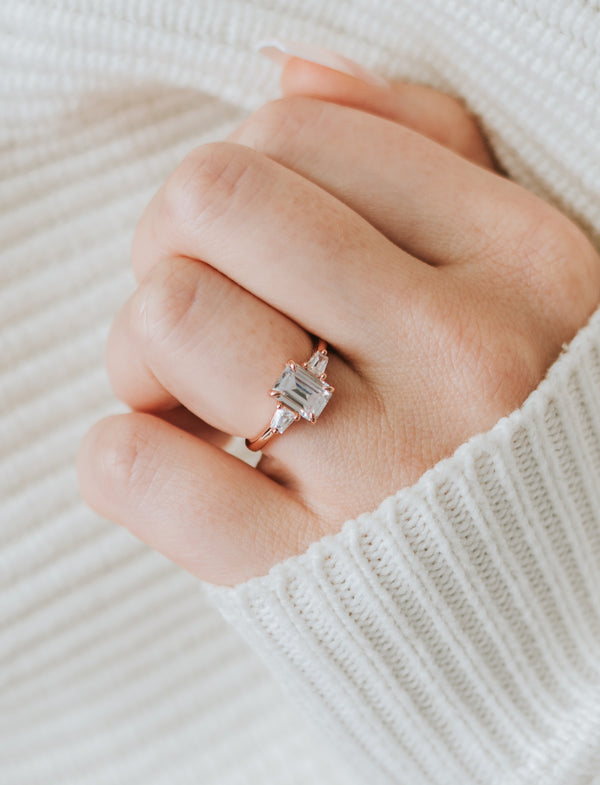
Pink-on-pink rose gold pairing. Rose gold has become one of the dominant engagement ring metals of the past decade. Morganite pairs with rose gold more naturally than any other engagement stone — the pink-on-pink color register produces visually unified rings that read as deliberately designed pairs rather than stone-and-metal combinations. Many morganite engagement rings sell specifically for this rose gold pairing.
Accessible pricing without compromising on real stone presence. Morganite engagement rings deliver substantial visible stone presence (2-3 carat sizes are routine) at price points significantly below comparable diamond, sapphire, or emerald rings. The price-to-presence ratio makes morganite particularly popular in the under-$2,000 engagement ring segment, with sterling silver and lab-created stones opening even lower price brackets.
Aesthetic register between traditional and alternative. Morganite reads as genuinely engagement-appropriate (clear faceted gemstone, traditional cuts, traditional settings) while still being distinctively non-diamond. Couples who don't want a diamond but also don't want to go fully into alternative bridal categories (moss agate, salt-and-pepper diamond) often arrive at morganite as the considered middle ground.
Natural vs. Lab-Created Morganite for Engagement Rings
Morganite engagement rings at Aquamarise come in both natural and lab-created (simulated) forms — a transparent two-tier approach that makes morganite engagement rings available across budget ranges from accessible to heirloom.
Natural morganite engagement rings
feature mined pink beryl with documented natural origin from deposits in Brazil, Madagascar, Afghanistan, Mozambique, or the United States. Natural morganite carries geological provenance, the price reflecting mining and cutting from rough natural stones, and the symbolic weight of a genuinely earth-formed gemstone. In this collection, natural morganite is standard in solid 14K gold engagement rings and premium gold vermeil pieces.
Lab-created morganite engagement rings
feature beryl grown in controlled laboratory conditions with the same chemical composition (beryllium aluminum cyclosilicate with manganese coloring) and the same Mohs hardness (7.5–8) as natural morganite. Lab-created stones bypass the mining stage and are produced at significantly lower cost — making pink-stone engagement rings accessible at price points where natural morganite would be cost-prohibitive. In this collection, lab-created morganite is standard in sterling silver engagement rings and accessible gold vermeil pieces.
Which to choose for an engagement ring:
- For heirloom-grade engagement contexts — solid 14K gold settings, intended to be worn for decades, passed down across generations, or marking significant lifetime milestones — natural morganite is the standard recommendation. The natural provenance adds interpretive weight that lab-created stones don't carry.
- For accessible engagement contexts — sterling silver or vermeil settings, partners on tighter engagement budgets, intentional choices to prioritize travel/home/early-marriage spending over ring cost — lab-created morganitedelivers the same visual aesthetic and the same Mohs hardness at significantly lower cost. The ring is no less "real" as an engagement ring; the stone is simply lab-grown rather than mined.
Stone type for each engagement ring is clearly specified in the product description. Both options ship with our warranty and are eligible for our engraving service. For couples wanting to upgrade from lab-created to natural morganite later (or repurpose the original ring into a different piece), our custom ring builder handles those conversions.

What Makes Aquamarise Morganite Engagement Rings Different
Three factors distinguish Aquamarise morganite engagement rings.
Stone options across engagement budget tiers. Morganite engagement rings at Aquamarise are offered with both natural morganite (mined pink beryl) and lab-created (simulated) morganite depending on the metal tier and price point. Natural morganite is standard in solid 14K gold engagement rings and premium gold vermeil pieces — appropriate for heirloom-grade engagement contexts. Lab-created morganite is standard in sterling silver engagement rings and accessible gold vermeil pieces — making genuine pink-stone engagement rings available across wider budget ranges. Stone type for each engagement ring is specified clearly in the product description.
Vintage-inspired specialization. Our vintage and Art Deco morganite engagement rings rank well precisely because we've concentrated design effort in this aesthetic register since 2016. Morganite suits vintage-inspired settings particularly well — the softer color and gentle aesthetic complement milgrain detailing, scroll engraving, and Art Deco geometric metalwork better than harder, brighter stones.
Honest framing across stone type and durability. We address natural vs. lab-created morganite directly rather than blurring the distinction. We also address durability honestly — morganite at Mohs 7.5–8 is genuinely engagement-suitable but not as durable as sapphire (9), moissanite (9.25), or diamond (10). We recommend protective settings (bezel, halo) for active wearers. For comprehensive durability discussion, see our morganite engagement rings durability and care guide.

Morganite Engagement Ring Settings
Solitaire Morganite Engagement Rings
A single morganite center stone in a clean band. The most traditional engagement silhouette, suited to wearers who want morganite's pink color to be the sole focal point. See solitaire engagement rings.
Halo Morganite Engagement Rings
Smaller accent stones surrounding the morganite center — typically lab-grown diamonds or moissanite. The halo amplifies visible scale and creates dramatic contrast where bright white accent stones surround morganite's gentle pink. One of the most popular morganite engagement ring configurations. See halo engagement rings.
Hidden Halo Morganite Engagement Rings
Accent stones placed beneath the morganite's girdle, visible only from the side. From directly above, the ring reads as a clean morganite solitaire. As the wearer's hand moves, the hidden accents catch light from new angles. See hidden halo engagement rings.
Three-Stone Morganite Engagement Rings
Three-stone settings flank morganite with smaller accent stones, traditionally interpreted as past, present, and future. For morganite specifically, the most popular configuration uses white accent stones (diamond, moissanite) to provide brilliant contrast against the pink center.
Vintage and Art Deco Morganite Engagement Rings
Morganite had documented prominence in Art Deco and Edwardian-era jewelry — the period favored softer pastel gemstones in geometric settings. Contemporary vintage-style morganite engagement rings carry authentic period referencing, particularly with milgrain detailing, scroll engraving, or Art Deco-style geometric metalwork. This is Aquamarise's signature design territory in morganite work — our existing rankings on vintage and Art Deco morganite variants reflect this concentration. See vintage antique engagement rings and our vintage engagement rings guide.

Metal Options — How Each Metal Reads with Morganite
Morganite has an unusually strong relationship with metal choice.
Rose Gold (Vermeil and Solid 14K) — Most Popular for Engagement
The signature morganite engagement ring pairing. Rose gold and morganite share the same warm pink color register, producing visually unified engagement rings where stone and metal complement each other directly. Most morganite engagement rings sold across the bridal market are in rose gold specifically because the pairing has become an aesthetic signature. Rose gold vermeil delivers this at accessible pricing (typically paired with lab-created morganite); solid 14K rose gold delivers heirloom-grade value (typically paired with natural morganite). See rose gold vermeil rings.
Yellow Gold (Vermeil and Solid 14K)
Yellow gold creates warm contrast against morganite's pink — pulls the pink toward peach and coral undertones. The most historically referenced pairing, drawing on Victorian and Edwardian setting traditions. Less popular than rose gold for contemporary morganite engagement rings but available throughout the collection. See yellow gold vermeil jewelry.
White Gold and Sterling Silver
White gold and sterling silver preserve morganite's pink at full intensity without warm metal influence — produces the cleanest pure-pink color presentation. Suited to buyers who want morganite's pink to be the only warm element in the ring. See sterling silver engagement rings and gold vermeil jewelry.
Solid 14K Gold (All Colors)
The premium tier — solid 14K gold throughout the entire ring, no plating. Heirloom-grade, fully repairable, holds material value across decades. Available in white, yellow, and rose gold. Typically paired with natural morganite for heirloom-grade engagement contexts. See solid gold engagement rings.
For complete metal selection guidance, see our precious metal guide, how to choose the best metal guide, 14K vs 18K gold guide, and what is gold vermeil.
Customization
Morganite engagement rings are well-suited to customization. Common custom requests include: color-specific stone selection (deeper pink, peach-leaning, lighter pastel), choice between natural and lab-created stones for the specific ring, custom setting design, alternate metals, accent stone choices, custom engraving, and matched engagement-and-wedding ring set configurations.
Our custom ring builder handles full custom morganite engagement ring designs from scratch. For additional design context, see design your own engagement ring, how to choose a ring, and how to buy an engagement ring.
For complimentary engraving on eligible pieces, see our engraving service. Use our free ring sizer before ordering.
Matching Wedding Bands
Morganite engagement rings pair particularly well with several wedding band styles:
Plain rose gold band — the simplest pairing, lets the morganite engagement ring remain the visual focus while maintaining the rose gold color register.
Diamond or moissanite eternity band — small accent stones in continuous band, providing brilliant white contrast against morganite's pink interior.
Coordinated morganite accent band — wedding band with smaller morganite accent stones echoing the engagement ring's center stone.
Curved or contoured band — shaped to follow the engagement ring's setting outline, important for halo or vintage settings where a straight band would leave visible gaps.
For matching bands, see women's wedding bands, solid gold wedding bands, rose gold vermeil women's wedding bands, and curved wedding bands. For coordinated sets, see couples engagement ring sets, wedding ring sets for women, and our wedding ring sets guide.
Shop by Setting
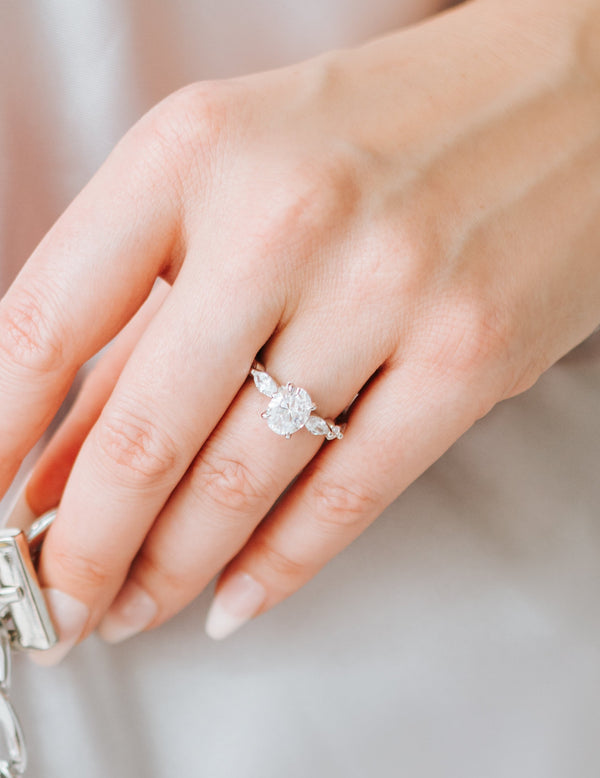
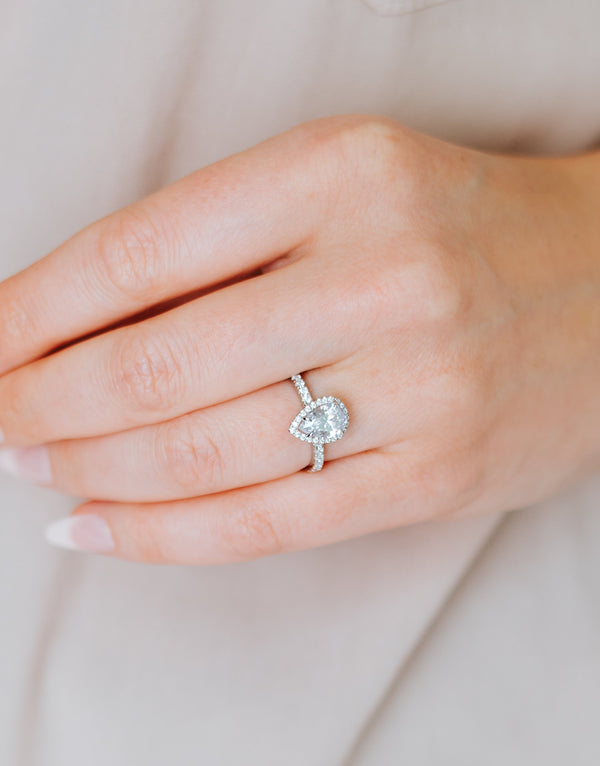
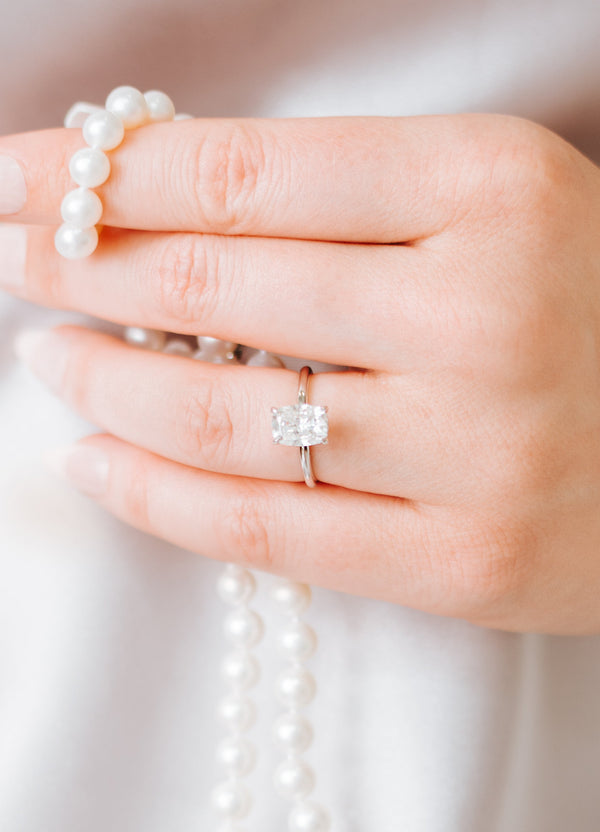
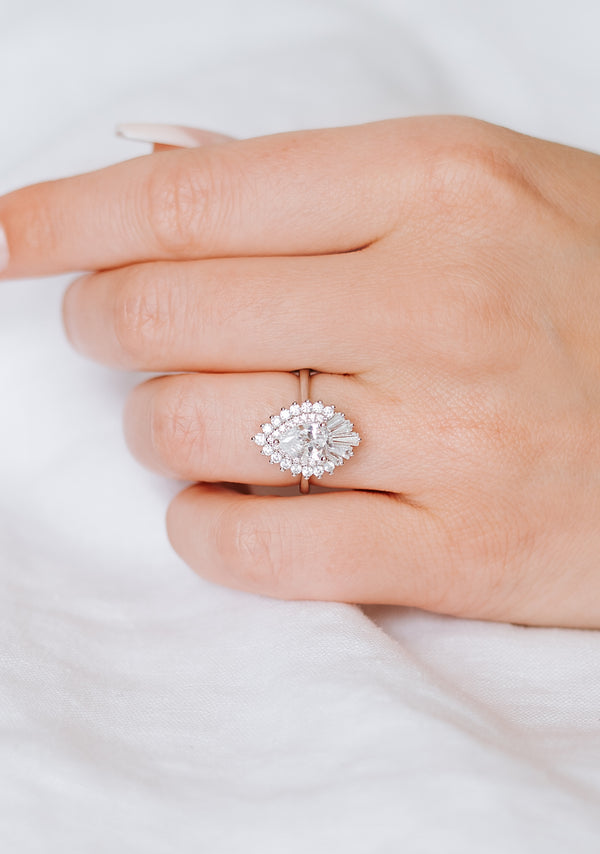
Explore popular engagement ring settings


From the Blog

Morganite Engagement Ring Guide - Everything You Need to Know Before You Buy
Morganite is one of the most distinctive stones available for engagement rings — warmer than diamond, more durable than its reputation suggests, and unlike anything else in the market for...

Morganite Meaning - The Stone, Its Color, and What It Carries
Morganite is a stone of divine love — not romance in the conventional sense, but something quieter and more sustaining. Its meaning is rooted in geology as much as symbolism:...

Morganite Engagement Rings: Durability, Care & Best Settings
Morganite sits at Mohs 7.5–8 — the same hardness as aquamarine and emerald, well above the quartz threshold for daily wear. Its reputation for fragility is undeserved. This guide covers...

Morganite vs Diamond Engagement Ring - An Honest Comparison
Most comparisons between morganite and diamond are written by diamond retailers. This one is not. Morganite and diamond are categorically different materials — different optical properties, different geological origins, different...
Morganite Engagement Ring FAQs
Ordering, Sizing, Shipping, and Returns
Free ring sizer. Our free ring sizer is a printable tool for accurate sizing at home.
Warranty. Every engagement ring carries our warranty. See our warranty and care guide.
Shipping. Worldwide insured shipping. See shipping.
Returns. 14-day return window on non-customized pieces. See returns and refunds policy. Custom pieces are non-returnable per custom personalized orders policy.
Verified reviews. See Aquamarise reviews.