


Gothic Ring Meaning: Symbolism, History and Hidden Details
Why gothic engagement rings feel more intimate than ordinary statement jewelry: the architecture, mourning rings, memento mori objects and secret inscriptions behind the style, the symbolism of its motifs and stones, and who it is really for.
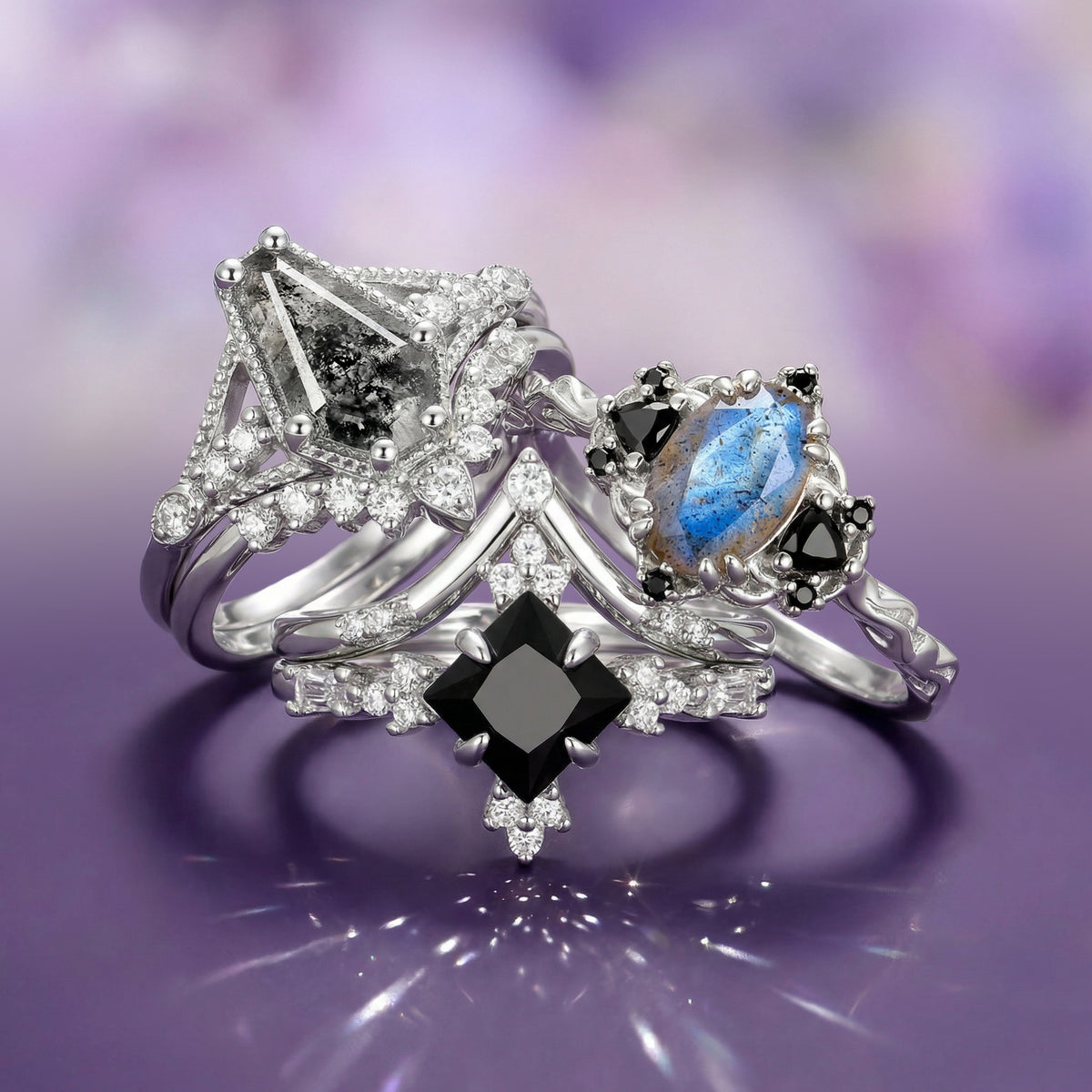
Gothic engagement rings are not simply dark versions of traditional bridal rings. They belong to a longer visual and emotional tradition shaped by Gothic architecture, revival design, sentimental rings, mourning jewelry, and memento mori objects that turned metal into a carrier of memory, devotion, and meaning. When that visual language meets ring history, the result feels unusually intimate: the architectural drama of the Gothic and the emotional privacy of rings meant to hold meaning close to the body, inherited at once.
Gothic Ring Meaning at a Glance
- Origins: the Gothic style first appeared in northern France in the early 12th century and spread from cathedrals into stained glass, manuscripts, and decorative arts.
- Emotional roots: posy rings with private inscriptions, mourning rings with black enamel, and memento mori jewelry that set beauty beside mortality.
- Core symbolism: commitment with depth, privacy over performance, and love that is serious without being conventional.
- Signature details: pointed arches, tracery-like openwork, black contrast, hidden engravings, skulls, roses, and thorns.
- Best for: couples who prefer cathedrals to ballrooms and story to formula.
Where the Word "Gothic" Comes From
A cathedral vocabulary, translated into metal.
The Gothic style itself first appeared in northern France in the early 12th century and spread far beyond architecture into stained glass, manuscripts, sculpture, and the decorative arts. Its signature language of pointed arches, tracery, soaring vertical lines, and dramatic light-and-shadow effects still shapes what people recognize as "gothic" today. The Victoria and Albert Museum notes that pointed arches are a defining characteristic of Gothic design and that tracery made windows increasingly complex, and that those forms were revived and reinterpreted long after the medieval period ended.
In ring design, that same vocabulary is translated into arched galleries, cathedral-like shoulders, sharply lifted silhouettes, windowed halos, pierced metalwork, and details that feel carved rather than merely decorative. That connection is one reason gothic engagement rings can look dramatic even when they are not overtly dark.
What Makes a Ring Feel Gothic?
Not every dark ring is gothic.
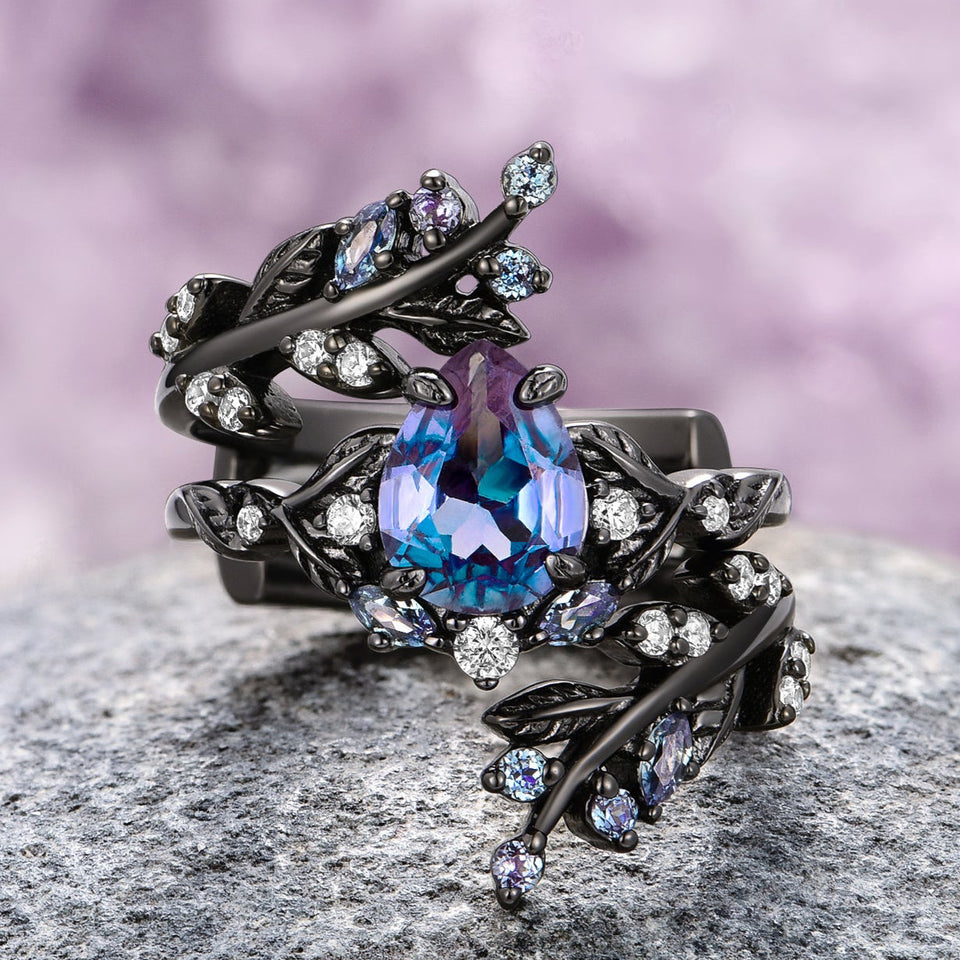
A ring feels gothic when it uses the language of shadow, height, symbolism, and emotional intensity. It may borrow pointed or arched forms, window-like framing, lace-like metalwork, hidden details, black contrast, devotional inscriptions, or motifs that suggest memory, time, transformation, and enduring love. The strongest gothic rings feel as though they belong not only to fashion but also to story, architecture, and ritual.
Museum collections preserve mourning rings with black enamel, hairwork, and even coffin-shaped bezels, while the British Museum's posy rings show that rings were also used to carry private inscriptions and vow-like messages hidden inside the band; one surviving example reads "Love me, and Leave me not." That is a powerful clue to why gothic rings feel different from ordinary statement jewelry. They do not just perform mood outwardly; they carry inward vows, secrets, and symbolic weight.
Love, Memory and the Gothic Imagination
Why gothic rings feel romantic instead of grim.
Historically, rings have long carried themes of devotion and remembrance. Mourning jewelry commemorated the dead with black enamel, hairwork, and coffin-shaped cut glass, and memento mori jewelry emerged in the Renaissance as a way of setting beauty beside death; one surviving ring even hides a heart-shaped ruby inside a skull, making love and mortality part of the same object.
That history gives modern gothic engagement rings real emotional ancestry. The aesthetic is not about darkness for shock value. It is about intensity, devotion, memory, and the feeling that love is most meaningful when it is chosen with full seriousness. Gothic romance has always understood that beauty becomes more powerful, not less, when it acknowledges time, change, and impermanence.
This is also why gothic rings often work through contrast. A piece can be severe in outline but tender in message. It can use shadowed surfaces and still feel devotional. It can reference skulls, coffins, or thorns and still read as deeply romantic, because in the memento mori tradition these images were not only warnings; they were reminders of what mattered enough to be remembered. Our guide to Victorian gothic engagement rings traces this era in detail, from serpents for eternity to jet for grief.
The Meaning People Find in Gothic Rings
Three things at once.
Because gothic engagement rings sit at the meeting point of architecture, memorial jewelry, and private vows, people often read them as symbols of several things simultaneously.
- Commitment with depth rather than commitment by default. Gothic design has always favored intricacy, structure, and emotional atmosphere, so a gothic ring tends to feel built with intention rather than chosen from a template.
- Privacy over performance. Posy rings were meant to hold intimate inscriptions, and mourning rings preserved deeply personal memorial details. Modern gothic rings inherit that inwardness even when their silhouettes are dramatic: they feel like vow objects more than display objects.
- Love that is serious without being conventional. A gothic ring says the wearer values symbolism, atmosphere, and individuality. It does not need to follow the brightest or most familiar bridal script to communicate permanence.
The Design Vocabulary of Gothic Rings
Strip away trends and the language is surprisingly coherent.
- Arches and vertical lift make a ring feel architectural. When a setting rises like a window opening or frames a center stone the way a Gothic niche frames a figure, the ring borrows the drama of height and form from the architecture that defined the style.
- Tracery-like detail makes metal feel closer to lace, stone carving, or stained-glass framework than to plain bridal polish. Fine openwork, pierced motifs, and intricate line patterns echo the same instinct that made Gothic decoration elaborate without feeling soft.
- Black enamel and shadow contrast connect modern gothic jewelry back to historical mourning objects, where dark grounds framed inscriptions and memorial details. That contrast still gives modern rings their gravity and atmosphere.
- Hidden messages and secret details give a ring emotional privacy. Posy rings carried inscriptions inside the band, and memento mori rings sometimes concealed symbols beneath the visible surface. Today that tradition survives through inside-band engraving, concealed motifs, and details visible only to the wearer or to someone invited close enough to notice.
- Symbolic motifs deepen the emotional charge: skulls, roses, thorns, claw-like details, antique-inspired cuts, and cathedral references that express eternal love, danger, devotion, or beauty with edge.
Gothic Gemstones and What They Mean
Dark, moody, and full of character.
| Gemstone | Mohs hardness | Gothic meaning |
|---|---|---|
| Red garnet | 6.5–7.5 | Blood-deep passion, protection, and devotion that endures |
| Black onyx | 6.5–7 | Strength, grounding, and the shadow that frames the light; see black onyx meaning |
| Herkimer diamond | 7 | Clarity and raw, unpolished honesty; a water-clear quartz crystal, not a diamond |
| Moss agate | 6.5–7 | Growth, renewal, and the overgrown ruin; a forest captured in stone |
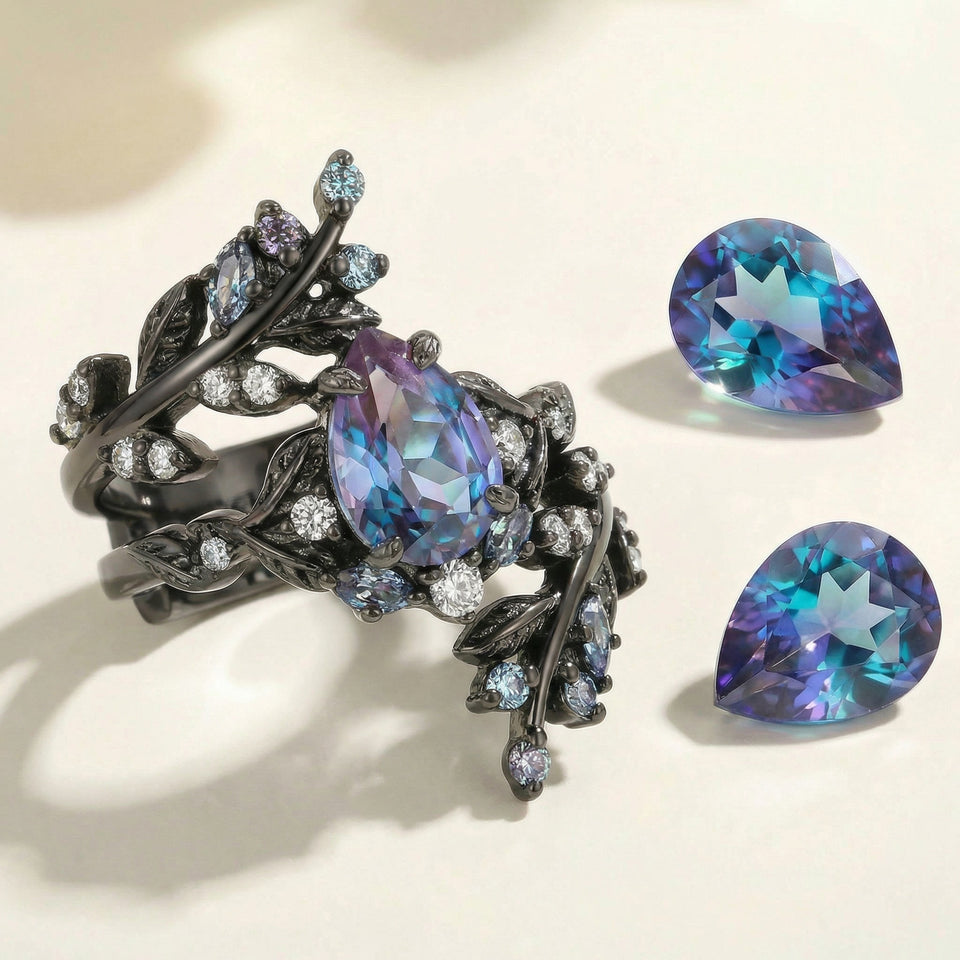
| Alexandrite | 8.5 | Transformation: green by day, red-violet by candlelight |
| Rutilated quartz | 7 | Golden needles frozen in clear stone; illumination through darkness |
| Blue sandstone | Wear mindfully | A night sky full of stars; destiny and the celestial gothic |
| Sapphire | 9 | Loyalty, wisdom, and royal permanence in deep midnight blue |
| Gray moissanite | 9.25 | Smoke-toned fire; brilliance with a shadow side |
Salt-and-pepper diamonds, with their inky inclusions, belong in this company too; read what a salt and pepper diamond is and our black gemstones guide for the wider palette. Stones below Mohs 7 suit careful, mindful wear; sapphire, moissanite, and alexandrite are built for every day.

Gothic Engagement Rings
Black ruthenium, dark gemstones, and cathedral-inspired settings, handcrafted and made to order.
Browse Gothic RingsMetals and Dark Finishes
How the shadow gets into the metal.
- Black ruthenium is the signature of the Lovers of the Dark collection: a dark finish applied over sterling silver or solid gold that gives the classic blackened-metal look. Our explainer on what black ruthenium is covers how it wears.
- Sterling silver and white gold carry a bright rhodium finish that reads like moonlight against dark stones.
- Yellow and rose gold bring the warmth of Victorian mourning and sentimental jewelry, especially with garnet, onyx, or alexandrite.
- Blackened bands for him extend the aesthetic to men's black rings and matching couples rings; see gothic rings for men.
Why Gothic Rings Feel Timeless
Built from centuries, not one trend cycle.
Gothic engagement rings have staying power because they are not built from one narrow trend cycle. They draw on medieval Gothic form, later Gothic Revival taste, sentimental ring traditions, and memorial jewelry that has survived in major museum collections. That long afterlife is part of why gothic rings can look unconventional without feeling disposable.
They also age well emotionally. A ring chosen for sparkle alone can feel replaceable. A ring chosen for mood, message, and identity tends to become more legible over time. Gothic design rewards repeat looking: the line of an arch, the shadow under a bezel, the engraving inside a band, the symbolism hidden in a motif. It tends to reveal more as the wearer grows with it.
Who Gothic Rings Are For
Romance with atmosphere.
They are for couples who prefer cathedrals to ballrooms, handwritten letters to standard scripts, story to formula, and symbolism to convention. They are for people who want an engagement ring to feel like a chosen emblem, not a category purchase.
They are also for people who do not want to choose between beauty and edge. A gothic ring can be severe or soft, architectural or floral, dramatic or restrained. It can feel gothic through one pointed silhouette and a hidden inscription, or through a whole world of arches, shadows, and talismanic details. The point is not costume. The point is recognition: the right gothic ring feels less like an accessory and more like a visual translation of the wearer's inner world. It sits naturally among alternative engagement rings and vintage and antique-inspired designs.
Gothic Engagement, Wedding and Promise Rings
The same language, three different vows.
- Engagement rings carry the fullest symbolism: a center stone framed by arches, tracery, or claws, often with an inscription inside. Browse the gothic engagement rings collection.
- Wedding rings lean on black metals, skull and celestial motifs, and dark bands designed to pair; our guide to gothic wedding rings covers the styles and how to wear them together.
- Promise rings are the quietest vow, and the most private: read gothic promise rings for meaning, finger, and the best dark gemstones.
- Victorian gothic is the historical heart of all three; see Victorian gothic engagement rings.
Keep reading: for the practical side of stones, metals, and settings, see our gothic engagement rings style guide; for the wider dark aesthetic, our guides to gothic necklaces, gothic earrings, and black rings for women cover the next questions most readers have.
Gothic Ring Meaning FAQ
What is a gothic engagement ring?
What gemstones are used in gothic engagement rings?
Are gothic engagement rings considered alternative engagement rings?
What makes gothic engagement rings unique?
Can a gothic engagement ring be subtle?
Why do inscriptions matter so much in gothic rings?
Can gothic engagement rings be vintage inspired?
What is a memento mori ring?
Do gothic engagement rings have real historical roots?
Why are gothic engagement rings becoming popular?
What makes a gothic engagement ring different from a dark engagement ring?
A ring built for story, not formula
Every Aquamarise gothic engagement ring is handcrafted and made to order in sterling silver, black ruthenium, vermeil, or solid gold, with inside-band engraving for the words only you will know.
Shop Gothic Engagement Rings


